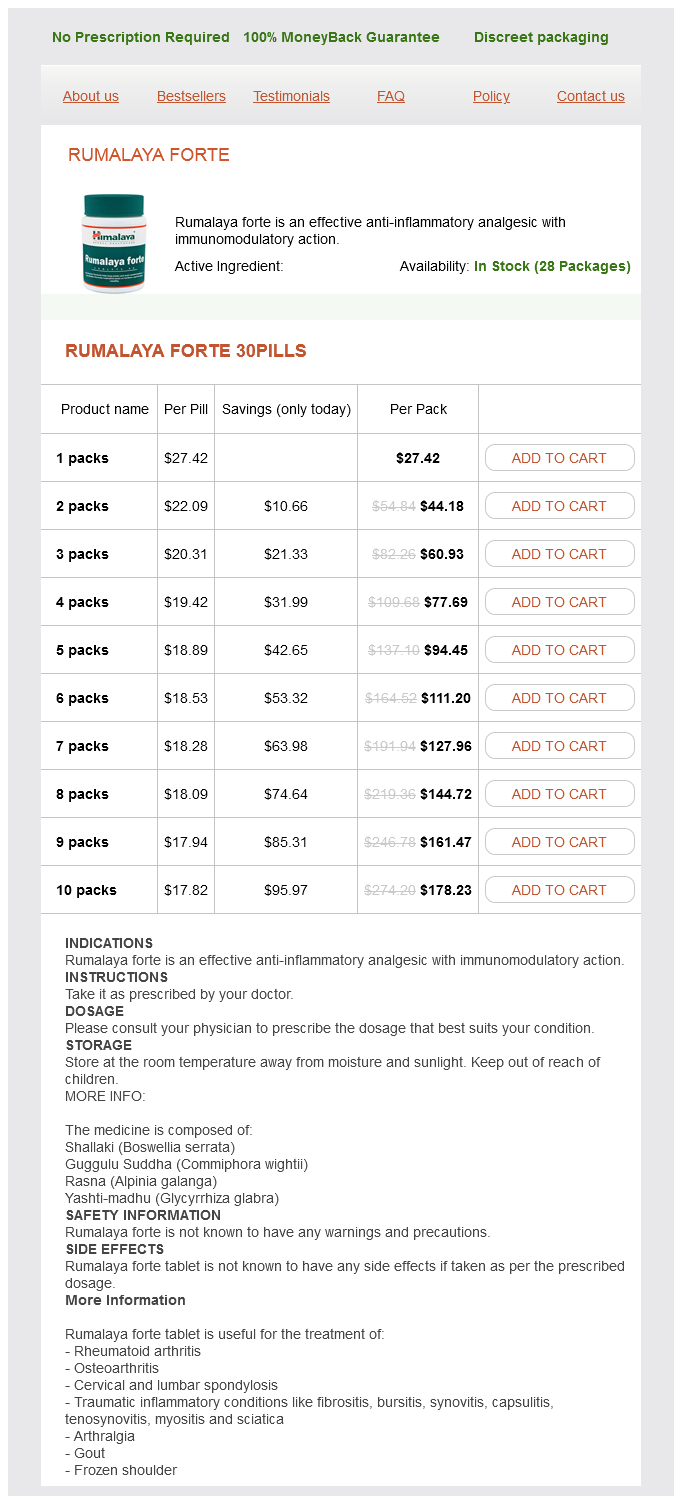
Rumalaya forte 30pills
- 1 packs - $27.42
- 2 packs - $44.18
- 3 packs - $60.93
- 4 packs - $77.69
- 5 packs - $94.45
- 6 packs - $111.20
- 7 packs - $127.96
- 8 packs - $144.72
- 9 packs - $161.47
- 10 packs - $178.23
Rumalaya forte dosages: 30 pills
Rumalaya forte packs: 1 packs, 2 packs, 3 packs, 4 packs, 5 packs, 6 packs, 7 packs, 8 packs, 9 packs, 10 packs
In stock: 509
Only $18,94 per item
Description
This is strikingly exemplified by regional variations in carbohydrate metabolism (gluconeogenesis and glycogen stor age by periportal hepatocytes; glycolysis by perihepatic vein hepatocytes) spasms lower back rumalaya forte 30 pills buy cheap on line. Recent research has proven that many liver functions are dispersed heterogeneously spasms of the stomach 30 pills rumalaya forte amex, with dispersed capabilities typically appearing as built-in components of coordinate meta bolic techniques [44] zerodol muscle relaxant buy rumalaya forte 30 pills overnight delivery. Hepatocytes and different cells situated at afferent and efferent ends of hepatic plates are subjected to totally different microenvironmental circumstances gastrointestinal spasms rumalaya forte 30 pills buy discount on line. Certain molecules are largely extracted by the primary hepatocytes that encounter the perfusing blood, lowering their concentration downstream. For example, oxygen levels within the blood at affer ent and efferent ends of sinusoids differ greatly because oxygen is efficiently extracted by hepatocytes positioned at the afferent ends of hepatic plates, exposing downstream hepatocytes to relatively hypoxic circumstances; the oxygen gradient alone can explain much of the heterogeneity of hepatocyte function associated to position in plates [46]. Other molecules modified or produced by upstream hepatocytes are excreted into the sinu soidal blood and could additionally be removed by hepatocytes located fur ther downstream. The complex interaction of metabolite concentration in the perfusing blood, coupled with extraction, modification, secretion, reextraction, and further modification, influence the metabolic occasions that occur in individual cells and outline unequal parenchymal territories that produce zonal vari ations in several physiological capabilities and pathological susceptibilities [44]. They have a lifespan of about four hundred days in an grownup steadystate hepat ocyte inhabitants, about 0. Although the hepato cytes are able to reenter the cell cycle upon harm, this capac ity decreases with age. There are, however nonresolved opposing opinions in regards to the alternative of lost hepatocytes throughout homeostatic circumstances. The contribution of hematopoietic cells to liver maintenance was a extremely popular thought 20 years in the past. Repopulation of bone marrowderived cells (macrophages, myofibroblasts) within the liver is clear in recipients of liver trans vegetation, in which these sort of liver cells are changed with cells of the host genotype [47]. However, the traditional and really attractive theory of "streaming liver" retains returning. Although few studies making use of lineagetracing methodology have supported this notion, a lot of the research have dominated out this option. Most recently, Axin2+ hepatocytes [49] abutting hepatic veins as nicely as hybrid periportal hepatocytes [50] have been reported to have selective progress advantage. Based on these outcomes a bidirectional streaming hypothesis, "somehow like ocean water entering into the delta of the Amazon River at high tide" has been proposed [51]. Cholangiocytes Cholangiocytes, or biliary epithelial cells, comprise much lower than 1% of the total number of cells within the liver parenchyma, since most are located in bile ducts in portal tracts [52]. Only the small est bile ducts penetrate the parenchymal mass within the firm of terminal portal veins, where they join with bile canaliculi in hepatic plates. The points of connection of ducts with hepatic plates are defined by tubular buildings referred to as the canals of Hering, that are composed of both cholangiocytes and hepato cytes [53]. They are also the placement of liver epithelial stem cells that may differentiate into both hepatocytes and cholangiocytes [54, 55]. Larger bile ducts include cholangiocytes that relaxation on a basal membrane and vary in quantity and size in proportion to duct dimension [56]. The cholangiocytes are additionally polarized cells, with an apical (luminal) and a basolateral area. Their luminal sur face membranes are expanded by microvilli and a single main cilium, which is a sensor for mechanical, osmolar, and chemical stress [57]. Although they comprise fewer mitochondria and sparser endoplasmic reticulum than do hepatocytes, cholangiocytes in intrahepatic bile ducts, along with the community of capillaries that surrounds them (the peribiliary plexus), type a metabolic unit that modifies the composition of canalicular bile [58]. The main secretory product is bicarbonate, whereas they absorb bile acids, glucose, and glutamate. They are within the first line of protection in opposition to microbial elements of the biliary tract, xenobiotics, and overseas antigens. They are extremely thin in regular liver, 150�170 nm throughout, and this attenuated cytoplasm is fenestrated. The fenestrae are dynamic structures, and their precise diameter is influenced by blood stress, composition of extracellular matrix, hormones, etc. The porosity of the sinusoidal endothe lial cells is polarized, and the fenestrae are more quite a few in the centrilobular zone. The maintenance of the fenestration requires paracrine and autorcrine indicators, which are principally pro vided by hepatocytes and stellate cells [61]. Surprisingly, these endothelial cells have principally anaerobic metabolism, providing lactate to the adjoining hepatocytes. Highresolution in vivo microscopy has revealed swelling and contracting of those cells as a response to vasoactive sub stances, suggesting that they participate in the regulation of blood move [62]. A distinctive practical feature of the sinusoidal endothelial cells is their excessive endocytic capacity. This course of is mediated by all kinds of scavenger receptors, providing the main pathway for clearance of weakened molecules from circulation [63, 64] (see Chapters 26�28). In spite of intensive studies, their position in adaptive immune reactions is still controversial [52]. Two populations of progenitor cells could be distinguished [65]: the liverresident population is thought to be liable for regular cell turnover, whereas bone marrowderived cells assist to replenish the sinusoidal endothelial cells when needed. The predominantly tolerogenic role of the hepatic immune system is well known [52], but the liver is also exposed to quite so much of viruses, bacteria, parasites, and metastatic tumor cells, so needs mechanisms to override immune tolerance. The human liver is estimated to comprise about 1010 lymphocytes of various phenotypes, positioned along sinusoids and in portal tracts [66]. The main elements of the hepatic immune system are innate lymphocytes, which embody a variety of T cells and nonT cells which are capable of respond rapidly to conserved ligands. The liver incorporates a quantity of types of antigen Endothelial cells Endothelial cells of sinusoids comprise about 3% of the paren chymal mass/volume [15] and probably quantity about 3 � 1010 in an adult human liver. Kupffer cells, sinusoidal endothelial cells, stellate cells, and cholangiocytes) are also necessary and energetic gamers of the livercentered immune system. Macrophages Macrophages are myeloid cells which are broadly distributed all through the tissues of mammalian organisms. Hepatic macrophages can be divided into two classes based on their origin [70]: resident macrophages and bone marrowderived macrophages. Resident macrophages of the liver, historically termed Kupffer cells, are established throughout embryonic development from the yolk sac and persist unbiased of blood monocytes. Bone marrowderived bloodborne monocytes give rise to monocytederived hepatic macrophages which would possibly be more characteristic of liver injury. These resemble Kupffer cells phenotypically, however they proceed to be functionally completely different. Macrophages are extremely versatile cells that play a sub stantial role in liver homeostasis, selling and resolving inflammatory processes and fibrosis [69]. Liver macrophages are avidly phagocytic through C3 and Fc receptors, clearing the sinusoidal blood of comparatively giant particulate materials, including micro organism and weakened cells (wornout erythrocytes, dead or broken hepatocytes, etc. Portal fibroblasts are spindleshaped mesenchymal cells in the periportal connective tissue [73]. Bone marrowderived mesenchymal stem cells can even dif ferentiate into myofibroblasts. The contribution of bone marrow cells is well established within the fibrotic processes of kidney and lung nevertheless it seems to be fairly limited within the liver. To the extent that the ontogenesis of the liver mirrors its phylogenesis, the embryonic improvement of the mammalian liver suggests the method in which by which the aggregation of a quantity of kinds of cell into the hepatic parenchyma might have developed (for particulars see Chapter 2). Furthermore, endothelial cells with scavenger exercise are within the gills and kid neys of cartilaginous and bony fish, and not in the liver as in all terrestrial animals [77]. The location of scavenger endothelial cells within the liver reflects a late step within the evolution of the mam malian liver. Nevertheless, the overall pattern of expression of transcription factors and genes involved in liver improvement is conserved in all these species [78], suggesting a common tran scriptional strategy for assembling the liver. Information on when this technique first emerged awaits additional genetic evaluation of intestine appendages in chordate ancestors of vertebrates. They are discovered in the house of Disse, between the sinusoidal endothelial cells and hepatocytes. Most probably they origi nate from the septum transversumderived mesothelial cells, however different choices are nonetheless open. These processes comprise both a brief reactivation of cell cycle transit in absolutely differentiated, mitotically quiescent hepato cytes, or the technology of totally new hepatocyte lineages from grownup liver stem cells (see Chapters 36 and 38). Hyperplasia of hepatocytes by this mechanism enlarges the parenchymal mass and will increase hepatocyte functional capacity. This process is regulated by the binding of ligands to hepatocyte nuclear recep tors, nearly 50 of which have been recognized [79, 80].
Holly Barberry (Oregon Grape). Rumalaya forte.
- Stomach ulcers, heartburn, stomach upset, and other conditions.
- How does Oregon Grape work?
- Dosing considerations for Oregon Grape.
- Psoriasis.
- Are there safety concerns?
- What other names is Oregon Grape known by?
- Are there any interactions with medications?
- What is Oregon Grape?
Source: http://www.rxlist.com/script/main/art.asp?articlekey=96499
Dichotomous improvement of the natural anion transport protein in liver and choroid plexus spasms left side generic 30 pills rumalaya forte overnight delivery. Ontogenic expression of the Na(+)independent natural anion transporting polypeptide (oatp) in rat liver and kidney spasms near heart rumalaya forte 30 pills generic mastercard. Rat organic anion transporting protein 1A1 (Oatp1a1): purification and phosphopeptide assignment spasms lower left side rumalaya forte 30 pills order mastercard. Effect of drug transporter genotypes on pravastatin disposition in European and AfricanAmerican members muscle relaxant migraine 30 pills rumalaya forte otc. Threedimensional group of rat hepatocyte cytoskeleton: relation to the asialoglycoprotein endocyto sis pathway. Organic anion transporting poly peptides contribute to the disposition of perfluoroalkyl acids in people and rats. Utility of a novel Oatp1b2 knockout mouse mannequin for evaluating the function of Oatp1b2 within the hepatic uptake of model compounds. Targeted dis ruption of murine natural aniontransporting polypeptide 1b2 (Oatp1b2/ Slco1b2) considerably alters disposition of prototypical drug substrates pravastatin and rifampin. Characterization of organic anion transporting polypeptide (Oatp) 1a1 and 1a4 null mice reveals altered trans port operate and urinary metabolomic profiles. Contribution of organic aniontransporting polypeptides 1A/1B to doxorubicin uptake and clear ance. Substrate specificities of rat oatp1 and ntcp: implications for hepatic organic anion uptake. Feeding pure hydrophilic bile acids inhibits intestinal cholesterol absorption: research in the gallstonesusceptible mouse. Effects of twothirds hepatectomy on sulfobromophthalein handling by the rat liver. Modulation of the transport of bilirubin and asialoorosomucoid throughout liver regeneration. Their ligands are small molecules falling into three classes: hormones which circulate to affect distant organs, molecules generated domestically by regular metabolism, or exogenous compounds like drugs. Sensing and responding to hormones, metabolites, and medicines is an essential function of the liver to maintain homeostasis � the constant inner environment � in the face of modifications to the external setting. For traditional endocrine receptors, names accurately describe the hormones that serves as ligands: thyroid hormone, steroid hormones, and vitamin D. Other nuclear receptors have been first recognized as "orphans" lacking recognized ligands, though ligands have since been recognized for a lot of [2]. The shade scaling in these columns reflect hepatic expression ranges (green: excessive, yellow: center, pink: low). Notably, the four varieties correspond roughly to their functional classifications in liver. Ligand binding triggers a conformation change, with release of corepressors and binding of coactivators. The liver plays key roles in thyroid hormone physiology, each as a target of native results and a mediator of systemic results [8]. In the liver, thyroid hormone regulates many target genes with key roles in lipid metabolism [9]. However, thyroid hormones also activate fatty acid oxidation, and this catabolic effect predominates in hyperthyroidism to cut back liver fats. Hypothyroidism increases serum ldl cholesterol (particularly in low density lipoproteins) and triglycerides, and also causes liver steatosis. Conversely, thyroid hormone is an efficient remedy for dyslipidemia but limited by antagonistic cardiac effects (tachycardia) and decreased bone mass. In addition to the liver being a target of thyroid hormone, it alters systemic thyroid hormone ranges by two primary mechanisms: deiodination and synthesis of binding proteins. The thyroid gland, in response to the hypothalamic�pituitary axis, releases the hormones T4 (thyroxine, with four iodines) and T3 (3,5,3triiodothyronine, with one much less iodine within the 5 place of its outer ring). While free thyroid hormone is the active fraction taken up by cells, greater than 99% of circulating thyroid hormone is protein sure, and the 2 forms are in equilibrium. Often these effects on binding proteins only affect complete thyroid hormone ranges however not the active free levels, such that patients stay clinically euthyroid, although selective results on thyroid hormone exercise are believable. Liver illnesses like cirrhosis or acute hepatitis can thus have an effect on thyroid hormone binding proteins or deiodination [8]. Glucocorticoids additionally stimulate hepatic synthesis of glycogen, fatty acids, and cholesterol, significantly within the fed state in the presence of insulin. In addition to gene activation, widespread gene repression can additionally be famous in response to glucocorticoids, significantly of inflammatory genes. Cortisol is the principle glucocorticoid in humans, produced by the zona fasciculata of the adrenal cortex in response to a hypothalamic�pituitary axis. Pharmacologic glucocorticoids are primarily used as antiinflammatory and immunosuppressive brokers, however metabolic sideeffects are common. The name glucocorticoid stems from their results on carbohydrate metabolism to keep blood glucose in the fasted state, most prominently through stimulation of gluconeogenesis in hepatocytes [12]. Sex variations are noticed in lots of liver ailments, with male preponderance in steatosis, hepatitis, cirrhosis, and hepatocellular carcinoma [16]. Of course, different factors besides intercourse steroids drive many variations, including behaviors associated to viral an infection and alcohol use. Sexual dimorphism has also been found in the liver gene expression, with sexspecific expression of greater than a thousand genes together with some encoding drugmetabolizing enzymes. Estrogen is the primary female sex hormone, synthesized in the ovary by the combined motion of theca and granulosa cells, the latter expressing aromatase enzyme. In males, much lower amounts of estrogen are generated by the testes and peripheral aromataseexpressing tissues together with fat. Androgens are synthesized in the testes and the zona reticularis of the adrenal cortex, with the latter being the main source of low ranges in females. The effect of androgens on liver steatosis is advanced, with inconsistent and reverse effects in varied studies [16]. Overall, the function of intercourse hormones and their receptors in liver vitality homeostasis is complicated and an area of energetic investigation. The precursor vitamin D3, or cholecalciferol, is obtained from the food regimen or synthesized in sun uncovered skin. The ultimate activation to calcitriol happens through 1hydroxylation in the kidney, a step underneath tight regulation by parathyroid hormone and phosphate ranges. Reported endogenous ligands include metabolites of bile acids, steroids, bilirubin, and lipids. Twentyfourhour diurnal rhythms are basic in biology, synchronizing habits and physiology with the day�night cycle. The elegant molecular underpinnings of this clock have been worked out in great element [63]. The central clock in the hypothalamus is entrained by mild, and mice missing complete physique Reverb and Reverb have profound disruptions in circadian behavior [65]. There are also autonomous peripheral clocks working in most tissues and cells, and Reverbs are wellstudied as parts of the hepatic clock. Reverbs regulate many key genes in liver metabolism, and liverspecific loss of both Reverbs results in marked hepatic steatosis [66]. Circadian regulation of metabolism could serve to synchronize expression of key gene products with anticipated every day intervals of relaxation and sleep versus exercise and consuming. This is a subject of great curiosity, as circadian disruptions corresponding to shift work are associated with metabolic illnesses, and alterations in circadian gene expression occur in steatotic livers [68]. It was originally an orphan, but crystal buildings revealed a large ligand binding pocket occupied by a phospholipid. Mutagenesis and other research help a mannequin of ligandindependent transcriptional activation that may be enhanced by phospholipid binding [56]. In truth, ligand binding could even lower the basal activation exercise (inverse agonism) [69]. They are immediate early response genes quickly induced by environmental changes, and implicated in diverse cellular processes [98].
Specifications/Details
Ongoing communication between the nucleus and the mitochondria is important to meet the wants for vitality and biosynthesis required for mobile homeostasis to guarantee cell survival and proliferation in response to changes within the microenvironment muscle relaxant 4212 rumalaya forte 30 pills generic otc. Mito-nuclear communication is a two-way communication system additionally referred to as retrograde and antiretrograde signaling spasms of the stomach rumalaya forte 30 pills buy on line. However muscle relaxant that starts with the letter z proven rumalaya forte 30 pills, long-term supplementation might intervene with other aspects of mitochondrial functioning muscle relaxant 8667 30 pills rumalaya forte discount visa, together with potential "mismatched" biosynthetic pathways between the original nucleus and the remaining exogenous mitochondria. Recent work in a poly-I:C model of schizophrenia in rats means that injecting healthy mitochondria into wholesome brains of adolescent rats has detrimental results [143]. Some animal models suggest that the bioenergetic benefits from mitochondrial transplantation stay measurable for at least three months after the occasion in the case of improved locomotor exercise of the rats [122]. These results suggest that mito-nuclear crosstalk may additionally be very plastic in regular cells and is able to accommodate exogenous mitochondria within the mixture to the last word good factor about the cell. In most instances this process is used to restore respiration to respiration-deficient recipient cells. However, dysfunctional mitochondria can be shed by exocytosis or direct contact with an adjacent healthy cell for mitophagy. Mitochondria and mitochondrial fragments, both as free organelles or in exosomes, microvesicles or apoptotic bodies, have been proven in the circulation and in cerebrospinal fluid indicating that processes deep in our evolutionary past may have been retained and tailored for quite a lot of physiological purposes within the body. Research perspectives Mitochondrial switch between cells and transplantation of healthy isolated mitochondria are new fields of endeavor that discover the benefits of replacing broken mitochondria following trauma and tissue harm, and in ailments like most cancers and following anticancer therapy. Mitochondrial switch to cells with repopulating capacity in vitro has the potential to be utilized clinically to address mitochondrial damage as well as to present novel pathways to autologous mitochondrial gene therapy. In these methods, mitochondrial transplantation has taken a step towards ameliorating life-threatening ischemia-reperfusion injuries of the guts and brain, and neurodegenerative, behavioral and neuromuscular illnesses that involve progressive mitochondrial dysfunction. Exploiting intercellular mitochondrial transfer and mitochondrial transplantation for health advantages might be challenging given the complexity of mitochondrial genetics and biology and the very limited tools out there for mitochondrial gene manipulation. The key significance of mitochondrial bioenergetics and mobile dynamics in health and in quite a few diseases recommend that these new fields of endeavor will be fertile soil within the coming years with the potential to ship substantial well being benefits. Acknowledgments the authors received salary support from the Health Research Council of New Zealand, the Marsden Fund, the Cancer Society of New Zealand, the Malaghan Institute of Medical Research and the University of Otago, Wellington. Loss of mitochondrial deoxyribonucleic acid throughout induction of petites with ethidium bromide. Mitochondrial genome transfer to tumour cells breaks the foundations and establishes a brand new precedent in most cancers biology. Mitochondrial transfer from astrocytes to neurons following ischemic insult: guilt by affiliation Mitochondrial transfer between cells: methodological constraints in cell culture and animal models. Mitochondria know no boundaries: mechanisms and features of intercellular mitochondrial switch. Intercellular mitochondria trafficking highlighting the twin position of mesenchymal stem cells as both sensors and rescuers of tissue harm. Horizontal switch of mitochondria between mammalian cells: beyond co-culture approaches. Mitochondrial transfer of induced pluripotent stem cell-derived mesenchymal stem cells to airway epithelial cells attenuates cigarette smoke-induced harm. Current progress of mitochondrial transplantation that promotes neuronal regeneration. Mitochondrial transplantation methods as potential therapeutics for central nervous system trauma. Mitochondrial transplantation as a possible and novel master key for treatment of various incurable illnesses. Ischemic defects within the electron transport chain increase the manufacturing of reactive oxygen species from isolated rat coronary heart mitochondria. A complete insight of novel antioxidant therapies for atrial fibrillation management. Ischaemic conditioning and concentrating on reperfusion injury: a 30 year voyage of discovery. Targeting mitochondrial oxidative metabolism as an approach to treat coronary heart failure. Mouse oocytes differentiate by way of organelle enrichment from sister cyst germ cells. Human mesenchymal stem cells reprogram grownup cardiomyocytes toward a progenitor-like state by way of partial cell fusion and mitochondria transfer. Miro1 regulates intercellular mitochondrial transport & enhances mesenchymal stem cell rescue efficacy. Improving the poststroke therapeutic efficiency of mesenchymal multipotent stromal cells by cocultivation with cortical neurons: the role of crosstalk between cells. Umbilical cord-derived mesenchymal stem cells suppress autophagy of T cells in patients with systemic lupus erythematosus via transfer of mitochondria. Mitochondrial switch of mesenchymal stem cells successfully protects corneal epithelial cells from mitochondrial injury. Protective mitochondrial transfer from bone marrow stromal cells to acute myeloid leukemic cells throughout chemotherapy. Mesenchymal stem cells shift mitochondrial dynamics and enhance oxidative phosphorylation in recipient cells. Mitochondrial transfer from bone marrow mesenchymal stem cells to motor neurons in spinal cord damage rats by way of gap junction. Mesenchymal stem cell repression of Th17 cells is triggered by mitochondrial switch. Mitochondria are transported alongside microtubules in membrane nanotubes to rescue distressed cardiomyocytes from apoptosis article. Long-distance intercellular connectivity between cardiomyocytes and cardiofibroblasts mediated by membrane nanotubes. Prophylactic therapy of hyperbaric oxygen treatment mitigates inflammatory response through mitochondria transfer. Vascular easy muscle cells provoke proliferation of mesenchymal stem cells by mitochondrial transfer by way of tunneling nanotubes. Cell adhesion-mediated mitochondria switch contributes to mesenchymal stem cell-induced chemoresistance on T cell acute lymphoblastic leukemia cells. Mitochondrial transfer from bonemarrow-derived stromal cells to pulmonary alveoli protects in opposition to acute lung harm. Mitochondria transfer from mesenchymal stem cells structurally and functionally repairs renal proximal tubular epithelial cells in diabetic nephropathy in vivo. Tumor microtubes convey resistance to surgical lesions and chemotherapy in gliomas. Reactivation of dihydroorotate dehydrogenase-driven pyrimidine biosynthesis restores tumor progress of respiration-deficient most cancers cells. Effects of mitochondrial gene deletion on tumorigenicity of metastatic melanoma: reassessing the Warburg impact. Endocytosis-mediated mitochondrial transplantation: transferring normal human astrocytic mitochondria into glioma cells rescues aerobic respiration and enhances radiosensitivity. Mitochondrial transplantation regulates antitumour exercise, chemoresistance and mitochondrial dynamics in breast cancer. Mitostasis in neurons: sustaining mitochondria in an prolonged cellular structure. Cytoplasm and organelle transfer between mesenchymal multipotent stromal cells and renal tubular cells in co-culture. Mesenchymal stem cells rescue cardiomyoblasts from cell death in an in vitro ischemia model by way of direct cell-to-cell connections. Dual roles for ubiquitination within the processing of sperm organelles after fertilization. Ooplasmic transfer in human oocytes: efficacy and considerations in assisted copy. Birth of toddler after transfer of anucleate donor oocyte cytoplasm into recipient eggs. MitoCeption as a new tool to assess the consequences of mesenchymal stem/stromal cell mitochondria on cancer cell metabolism and function. Artificial mitochondria switch: current challenges, advances, and future purposes. Mitochondrial transfer by photothermal nanoblade restores metabolite profile in mammalian cells. Prevention of axonal degeneration by perineurium injection of mitochondria in a sciatic nerve crush harm model.
Syndromes
- If you smoke, now is the time to quit.
- Fructose (found in fruits)
- Elder care - resources
- Antibiotics
- Allergic reactions to certain medications or toxins (alcohol, cocaine, certain chemotherapy drugs, heavy metals, and catecholamines)
- Gout
- Canned heating sources
- Protanopia -- difficulty telling the difference between blue/green and red/green
- Eosinophils
Related Products
Additional information:
Jagged1 is a ligand of Notch spasms under belly button rumalaya forte 30 pills discount on-line, and is important in the Notch signaling pathway infantile spasms 6 months old 30 pills rumalaya forte for sale, which is important in organ development gastric spasms rumalaya forte 30 pills cheap with visa. Surprisingly muscle relaxant of choice in renal failure 30 pills rumalaya forte buy, 50�70% of these mutations are de novo, and never found within the parents. About 21�50% of patients with Alagille syndrome who manifest hepatic symptoms in infancy ultimately require liver transplantation. Two circumstances of hepatocellular carcinoma in infants with this dysfunction have been reported [167]. Villin disease Villin is a tissuespecific actinmodifying protein, crucial within the bundling, nucleation, capping, and severing of actin filaments [173]. In vertebrates, villin is expressed at the apical floor of epithelial cells and is a significant structural component of the comb border cytoskeleton. Direct comparison of Snmesoporphyrin, an inhibitor of bilirubin production, and phototherapy in controlling hyperbilirubinemia in term and nearterm newborns. Control of jaundice in preterm newborns by an inhibitor of bilirubin manufacturing: studies with tinmesoporphyrin. Oxidative stress causes enhanced endothelial cell harm in human heme oxygenase1 deficiency. The impact of inflammatory licensing on heme oxygenase1mediated induction of regulatory T cells by human mesenchymal stem cells. Bilirubin conjugation in the spiny dogfish Squalus acanthias, the small skate Raja erinacea and the winter flounder Pseudopleuronectes americanus. Normal neurological outcome in two infants treated with change transfusions born to mothers with Crigler Najjar Type 1 dysfunction. Relationships between serum whole bilirubin levels and metabolic syndrome in Korean adults. Are elevated aminotransferases and decreased bilirubin extra characteristics of the metabolic syndrome Chronic auditory toxicity in late preterm and time period infants with vital hyperbilirubinemia. Effects of sample dilution, peroxidase concentration, and chloride ion on the measurement of unbound bilirubin in untimely newborns. Determination of serum unbound bilirubin for prediction of kernicterus in low birthweight infants. Splice site mutations: a novel genetic mechanism of CriglerNajjar syndrome type 1. Control of steroid, heme, and carcinogen metabolism by nuclear pregnane X receptor and constitutive androstane receptor. Management of hyperbilirubinemia in the newborn infant 35 or extra weeks of gestation. Initial clinical testing evaluation and danger evaluation for universal screening for Hyperbilirubinemia Screening Group. Predischarge screening for severe neonatal hyperbilirubinemia identifies infants who need phototherapy. Endogenous manufacturing of carbon monoxide in regular and erythroblastic new child infants. The extent of "shunt" bilirubin and erythrocyte survival within the newborn infant measured by the administration of (15N) glycine. Prevention of Rh hemolytic illness: Final results of the "excessive danger" scientific trial. Deficiency of hepatic natural anionbinding protein, impaired organic anion uptake by liver and "physiologic" jaundice in new child monkeys. Prolonged neonatal unconjugated hyperbilirubinemia related to breast feeding and a steroid, pregnane3, 20diol, in maternal milk that inhibits glucuronide formation in vitro. Breast milk jaundice: In vitro inhibition of rat liver bilirubinuridine diphosphate glucuronosyltransferase exercise and Z proteinbromosulfophthalein binding by human breast milk. Suppression of bilirubin production within the CriglerNajjar, sort I syndrome: research with heme oxygenase inhibitor tinmesoporphyrin. A nonhuman primate model of human radiationinduced venocclusive liver disease and hepatocyte damage. Host conditioning and rejection monitoring in hepatocyte transplantation in humans. Chronic unconjugated hyperbilirubinemia without overt indicators of hemolysis in adolescents and adults. Chronic nonhemolytic unconjugated hyperbilirubinemia with glucuronosyltransferase deficiency: scientific, biochemical, pharmacologic, and genetic proof for heterogeneity. Glucuronic acid conjugation by patients with familial nonhemolytic jaundice and their relatives. Unconjugated hyperbilirubinemia: physiological evaluation and experimental approaches to remedy. Parental isodisomy for chromosome 2 as the purpose for CriglerNajjar syndrome kind I syndrome. Management of hyperbilirubinemia and prevention of kernicterus in 20 patients with CriglerNajjar disease. Rapid prenatal analysis of CriglerNajjar syndrome type 1 by genetic evaluation of chorionic villus samples. The Gunn rat: An animal mannequin for inherited deficiency of bilirubin glucuronidation, in Animal Models in Liver Research (eds. The Gunn rat: an animal mannequin for inherited deficiency of bilirubin glucuronidation, in Animal Models in Liver Research (eds. Gunn rats as a surrogate model for analysis of hepatocyte transplantationbased therapies of CriglerNajjar syndrome type 1. Amelioration of hyperbilirubinemia in Gunn rats after transplantation of human induced pluripotent stem cellderived hepatocytes. Disruption of the Ugt1 locus in mice resembles human CriglerNajjar type I disease. Persistent nonhemolytic hyperbilirubinemia associated with lipochromelike pigment in liver cells: report of 4 instances. DubinJohnson syndrome in Israel: medical, laboratory, and genetic aspects of one hundred and one circumstances. Intravenous cholecystography and metabolism of meglumine iodipamide (biligrafin) in DubinJohnson syndrome. Black liver illnesses in Corriedale sheep: metabolism of tritiated epinephrine and incorporation of isotope into the hepatic pigment in vivo. Mechanism of glutathione Sconjugate transport in canalicular and basolateral rat liver plasma membranes. Biliary excretion of bile acid conjugates in a hyperbilirubinemic mutant spraguedawley rat. Clinical, pathologic, and genetic options of neonatal DubinJohnson syndrome: a multicenter research in Japan. Impaired protein maturation of the conjugate export pump multidrug resistance protein 2 as a consequence of a deletion mutation in DubinJohnson syndrome. Hepatic pigmentation with photosensitivity: a syndrome in Corriedale sheep resembling Dubin Johnson syndrome in man. Biliary excretion of sulfobromophthalein compounds in regular and mutant Corriedale sheep: proof for a disproportionate transport defect for conjugated sulfobromophthalein. Mechanisms of hepatic transport of drugs: Implications for cholestatic drug reactions. Hereditary chronic conjugated hyperbilirubinemia in mutant rats brought on by faulty hepatic anion transport. DubinJohnsonlike syndrome in Golden Lion tamarins (Leontopithecus rosalia rosalia). Congenital photosensitivity and hyperbilirubinemia in Southdown sheep in the United States. Mutation liable for congenital photosensitivity and hyperbilirubinemia in Southdown sheep. Heterozygous nonsense mutation associated with intrahepatic cholestasis of being pregnant. Rapid correction of Mdr2 deficiency by transplantation of Mdr3 transgenic hepatocytes.
Usage: t.i.d.
It also permits the detection of lesions that can be selected for histological examination muscle relaxant used for migraines 30 pills rumalaya forte cheap free shipping. The degree of iron load may be evaluated in the basal ganglia and the brain stem buildings spasms tamil meaning 30 pills rumalaya forte with amex, but not in the cerebral cortex (De Reuck muscle relaxant lyrics buy discount rumalaya forte 30 pills line, 2016a) zma muscle relaxant cheap 30 pills rumalaya forte. Main analysis Number of sufferers Unmixed dementia Mixed dementia P value Alzheimer illness Frontotemporal lobar degeneration Vascular dementia Lewy physique disease Progressive supranuclear palsy Amyotrophic lateral sclerosis Corticobasal degeneration 107 27 27 24 17 17 3 45% 79% 55% 23% 60% 60% 100% 55% 21% 45% 77% 40% 40% 0% N. Frontotemporal lobar degeneration is considerably extra often an unmixed entity, while Lewy body illness is principally mixed and associated with other pathologies (percentage distribution of the completely different postmortem confirmed kinds of dementia of the reminiscence clinic of Lille University Hospital). A lacune within the putamen (white arrow) on the T2 sequence and a microbleed within the insular cortex (black arrow) on the T2* sequence are seen. This is predominantly observed in aged sufferers compared with the unmixed form occurring primarily in adults. Lacunes as a end result of arteriosclerotic small-vessel illness are one other cause, contributive to the development of mixed dementia (Raz, Knoefel & Bhaskar, 2016). Additional cerebrovascular lesions are additionally regularly observed in this type of mixed dementia (De Reuck et al. Iron deposition is simply moderately elevated within the caudate nucleus of both unmixed and blended cases (De Reuck et al. Unmixed and blended varieties occur primarily in the oldest aged patients, rising nonetheless additional with age (Wakisaka et al. Global cerebral atrophy and moderate diffuse white matter modifications on the T2 and T2* sequences are seen. Moderate world cortical atrophy with a small insular infarct (white arrow) on the T2 sequence and a cortical microbleed in the parietal cortex (black arrow) on the T2* sequence are seen. No differences in severity are found between unmixed and blended cases (De Reuck et al. Extensive frontal cortical atrophy and severe confluent hyperintensity of the underlying white matter are seen. Mixed dementia: a neuropathological overview 9 the mixed cases compared with regular brains, in all probability as a outcome of associated cerebrovascular illness (De Reuck et al. The iron content is decreased within the subthalamic nucleus, the red nucleus, and the substantia nigra (De Reuck et al. Severe atrophy of the insular cortex with a small cortical microbleed (arrows) on the T2 and T2* sequences is seen. Vascular dementia the postmortem evaluation of VaD is finished in accordance with the standards of McAleese et al. It happens more incessantly within the old age groups, compared with the unmixed form of VaD, appearing more in the adult group. Vascular cognitive impairment is especially linked to the presence of lacunar infarcts and diffuse ischemic adjustments in the white matter (De Reuck et al. In the mixed sort a number of larger infarcts are also extra frequent (Attems & Jellinger, 2014). However, as these sufferers die at an old age and are a half of the complicated Pick ailments, a low incidence of associated cerebrovascular pathology may be suspected (De Reuck, 2017c). It can solely be suspected on clinical grounds: fluctuation 12 Diagnosis and Management in Dementia in cognitive function, persistent well-formed visible hallucinations, and spontaneous motor options of parkinsonism are the core options (McKeith et al. Key details of mixed dementia � the mind is the middle of all cognitive capabilities, together with quick and distant reminiscence, persona, speech and motor actions, and recognition of the surroundings. Summary factors � this text examines the underlying diseases leading to combined dementias in postmortem brains. Neuropathologic diagnostic and nosologic standards for frontotemporal lobar degeneration: Consensus of the consortium for frontotemporal lobar degeneration. Amyotrophic lateral sclerosis brain banking: A proposal to standardize protocols and neuropathological diagnostic standards. Histopathological stainings and definition of vascular disruptions within the elderly mind. Post-mortem magnetic resonance imaging as an extra tool of the neuropathological examination of neurodegenerative and cerebrovascular illnesses. Cerebrovascular lesions in Pick advanced diseases: A neuropathological examine with a 7. Detection of cortical microbleeds in postmortem brains with lewy physique dementia: A 7. The topography of cortical microinfarcts in neurodegenerative ailments and in vascular dementia: A postmortem 7. Topographic distribution of white matter modifications and lacunar infarcts in neurodegenerative and vascular dementia syndromes: A postemortem 7. The topography of cortical microbleeds in frontotemporal lobar degeneration: A autopsy 7. Prevalence of small cerebral bleeds in patients with progressive supranuclear palsy: A neuropathological study with 7. Cerebrovascular lesions in blended neurodegenerative dementia: A neuropathological and magnetic resonance examine. Iron deposits in post-mortem brains of sufferers with neurodegenerative and cerebrovascular diseases: A semi-quantitative 7. The impression of cerebral amyloid angiopathy on the incidence of cerebrovascular lesions in demented patients with Alzheimer features: A neuropathological research. Cerebrovascular lesions in patients with frontotemporal lobar degeneration: A neuropathological examine. The incidence of post-mortem neurodegenerative and cerebrovascular pathology in mixed dementia. Topographic distribution of mind iron deposition and small cerebrovascular lesions in amyotrophic lateral,sclerosis and in frontotemporal lobar degeneration: A autopsy 7. Aging and cerebrovascular lesions in pure and in blended neurodegenerative and vascular dementia brains: A neuropathological examine. The worth of magnetic resonance imaging as a biomarker of amyotrophic lateral sclerosis: A systematic evaluation. Neuropathological and genetic correlates of survival and dementia onset in synucleinopathies: A retrospective examine. Criteria for the neuropathological analysis of dementing issues: Routes out of the swamp. Diabetes, obesity, and prognosis of amyotrophic lateral sclerosis: A population based study. Selective effects of ageing on mind white matter microstructure: A diffusion tensor imaging tractography research. Neuropathological diagnoses and scientific correlates in older adults in Brasil: A cross-sectional study. Age-associated prevalence of danger components of lewy body pathology in a basic inhabitants: the Hisayama study. A dysfunction of the bloodebrain barrier could be answerable for the progression of several neurological ailments. It might cause microhemorrhages, macrohemorrhages, small a number of infarctions, transient neurological symptoms, and ultimately dementia. It is involved in many features such as cerebral blood circulate regulation, bloodebrain barrier change, immune surveillance, trophic support, and homeostatic balance. Over the years, the time period "vascular dementia" (VaD) was adopted as a extra inclusive nosographic category, and efforts have been made to propose correct diagnostic criteria (Chui et al. On one hand, fashionable diaga nostic criteria allowed one to categorize subgroups in the VaD inhabitants to perform rigorous clinical trials, but, however, the term vascular dementia was progressively criticized. Epidemiology and threat factors According to estimates from the World Alzheimer Report 2015, forty six. With population aging, the variety of topics affected by dementia is predicted to attain one hundred fifteen million in 2050, worldwide (Prince et al. Vascular dementia: an outline 19 In this situation, VaD is claimed to be the second most typical explanation for dementia, accounting for w15%e20% of cases (Goodman et al. To provide an understanding of the full spectrum of dementia within the basic population and to establish threat elements across completely different populations and life courses, we need to analyze population-based epidemiological research. Evaluation of the modifications in dementia incidence and prevalence over time is challenging, as changes in diagnostic criteria and different methodological variations can cause information to be not easily comparable. A attainable rationalization for this modification could be that different causes of dementia are more frequent at very old ages and frequently overlap. Since 2010, descriptive epidemiological research have strengthened the evidence that the incidence and prevalence of dementia are in a declining pattern in Europe and North America and that the number of individuals with dementia can remain secure regardless of inhabitants aging (Satizabal et al. This may be the end result of a greater control of the primary risk factors and elevated awareness of the importance of increase an sufficient cognitive reserve.
Tags: purchase 30 pills rumalaya forte with visa, generic rumalaya forte 30 pills visa, 30 pills rumalaya forte generic, 30 pills rumalaya forte buy overnight delivery, buy 30 pills rumalaya forte otc, rumalaya forte 30 pills generic with mastercard, rumalaya forte 30 pills order line, 30 pills rumalaya forte purchase with amex, 30 pills rumalaya forte with mastercard, rumalaya forte 30 pills buy online, rumalaya forte 30 pills buy, rumalaya forte 30 pills buy free shipping, discount 30 pills rumalaya forte otc, 30 pills rumalaya forte purchase with visa, order rumalaya forte 30 pills without a prescription, rumalaya forte 30 pills purchase fast delivery
10 of 10
Votes: 302 votes
Total customer reviews: 302
Customer Reviews
Yorik, 55 years: Aging and cerebrovascular lesions in pure and in blended neurodegenerative and vascular dementia brains: A neuropathological study.
Jensgar, 38 years: Disruption of intraflagellar transport in adult mice results in weight problems and slowonset cystic kidney illness.
Treslott, 49 years: Research perspectives Over the final 50 years, dramatic progress has been made within the understanding of mitochondrial replication, transcription, and translation methods, and the mechanisms and components concerned in every process.
Berek, 46 years: They advised that the septohippocampal cholinergic pathway might relate to the motivation to explore new environments and the acquisition and storage of spatial reminiscence (Lamprea, Cardenas, Silveira, Walsh, & Morato, 2003).
Sanuyem, 22 years: In distinction to the dearth of selectivity of this pathway for soluble cytosolic proteins, removing of organelles or particulate structures from the cytosol via macroautophagy is a discriminatory course of.
Dolok, 61 years: Recent research suggests that the shift from "silent" altered neural circuit activity to memory impairments are secondary to abnormal firing and synaptic plasticity within the corticohippocampal circuits.