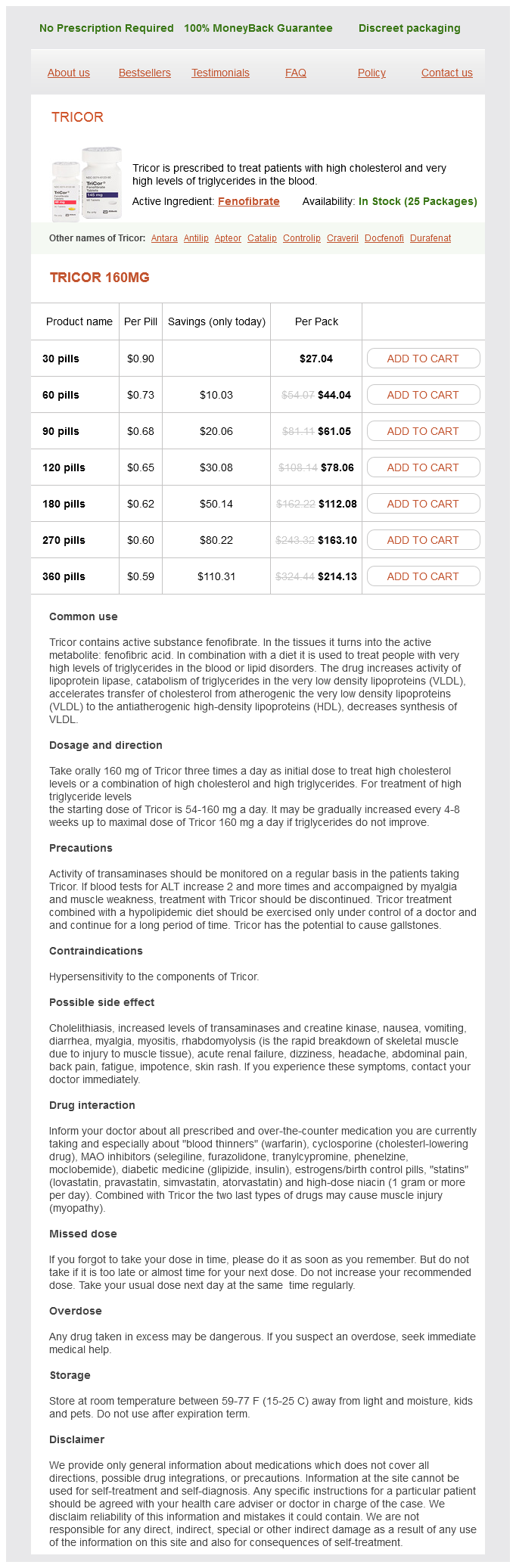
Tricor 160mg
- 30 pills - $27.04
- 60 pills - $44.04
- 90 pills - $61.05
- 120 pills - $78.06
- 180 pills - $112.08
- 270 pills - $163.10
- 360 pills - $214.13
Tricor dosages: 160 mg
Tricor packs: 30 pills, 60 pills, 90 pills, 120 pills, 180 pills, 270 pills, 360 pills
In stock: 641
Only $0,63 per item
Description
Therefore food cholesterol chart uk generic tricor 160 mg, the antifungal spectrum of echinocandin antifungals is considerably restricted cholesterol test walmart 160 mg tricor generic mastercard. Members of the fungal genera Candida and Aspergillus are essentially the most vulnerable to echinocandins cholesterol medication take at night purchase 160 mg tricor free shipping. Likewise cholesterol medication on the market tricor 160 mg discount amex, echinocandin antifungals present solely restricted exercise against fungi (such as Fusarium, Scedosporium, Coccidioides, Blastomyces, and Histoplasma) that cause systemic infections. Echinocandin antifungals are also efficient against pneumonia attributable to Pneumocystis jiroveci (formerly known as P. These medicine are used to deal with invasive Candida or Aspergillus infections, Candida infections of mucous membranes, and candidemia, an an infection by which yeast colonizes the bloodstream. Micafungin is particularly efficient against infections with a particular species of Candida called C. Additionally, caspofungin can cause chills and fever; micafungin may cause again pain, sleep disruptions, nosebleeds, lack of urge for food, fatigue, and a sore mouth; and anidulafungin may cause pain and swelling on the injection site. Persons in danger for systemic fungal infections, who typically require therapy with echinocandin antifungal medicine, embody those who have cancer and those that have had a transplant. Echinocandin antifungals work together with some of the drugs given to transplant recipients that suppress the immune system. Caspofungin and micafungin, for example, can enhance the blood ranges of several antirejection drugs and produce poisonous unwanted facet effects. Echinocandin antifungals can also work together with other antifungal drugs such as triazoles (fluconazole, posaconazole, voriconazole, itraconazole, and ketoconazole), and with polyenes, that are varied preparations of amphotericin B, for specific fungal infections. Drug Susceptibility Albendazole, mebendazole, and praziquantal are medication used to treat echinococcosis. Natural Habitat and Features Echinococcus species are cestodes (tapeworms) with complex life cycles requiring two mammalian hosts. Their definitive hosts (where sexual copy occurs) are carnivores, commonly dogs and foxes. In definitive hosts, the worms remain small, normally less than 6 millimeters in measurement, and include a head and three egg packets or proglottids. After ingestion by herbivores, Echinococcus species eggs develop into oncospheres that may penetrate intestinal epithelium. Once there, they cross into blood or lymph vessels after which travel passively to target organs, normally the liver or lung but sometimes the spleen, brain, coronary heart, and kidneys. These cysts develop to between 5 and 10 centimeters in size within one year and can persist and stay viable for years, rising, every so often, so large they comprise a quantity of liters of fluid. The cysts include protoscoleces (called hydatid sand) and are ingested by carnivores, where they develop into grownup Echinococcus cestodes. Pathogenicity and Clinical Significance the completely different species of Echinococcus trigger completely different syndromes of illness in humans. Most individuals have a light infection and may current with a fever, a rash, and mouth blisters. Infants can also current with pneumonia, upper respiratory infections, and lethargy. Screening and Diagnosis It is feasible to isolate echovirus from blood, cerebrospinal fluid, feces, and the throat in cell tradition, though diagnostic outcomes typically take a quantity of days. The faster turnaround time of one day favors the latter diagnostic testing choice. If a more extreme type of echovirus an infection has been diagnosed, medical care is provided based on the particular signs. Prevention and Outcomes Regular, adequate hygiene, together with handwashing, may cut back the spread of echovirus. Echovirus infections are widespread infections which would possibly be typically gentle but could also be extra extreme and life-threatening. Echoviruses are among the many main causes of hospital visits in febrile infants and younger kids. Causes Echoviruses are unfold by human contact, mainly via the fecal-oral route but also throughout pregnancy or childbirth. Also, echoviruses are often unfold in hospitals from staff to patients because of improper handwashing approach. Risk Factors Although any individual can contract echovirus infection, individuals of low socioeconomic status are most prone due to their typically poor living conditions, which includes a larger incidence of consuming contaminated meals and using unsafe drinking water. Echovirus infections could happen at any age, but the youthful the person, the higher the chance. Symptoms Many persons with echovirus infection may be asymptomatic and require no follow-up or remedy. For contaminated individuals, signs usually begin three to six Infectious Diseases and Conditions Martin, Richard J. Ehrlichiosis is most commonly transmitted by the lone star tick, though it could be transmitted by the canine tick and the deer tick. A tick have to be hooked up and feeding for at least twenty-four hours to transmit this illness. Risk Factors the chance factors for ehrlichiosis are contact with an contaminated tick; residing in or visiting an area with ticks; being outside in warm weather; and having a pet dog. Ehrlichiosis usually occurs within the Northeast, Upper Midwest, Southeast, and south-central states and in California and Texas. Symptoms the signs of ehrlichiosis develop inside 5 to fourteen days of the tick chunk. These symptoms include fever, headache, fatigue, muscle aches, nausea, vomiting, diarrhea, rash, chills, cough, joint pain, and confusion. Severe or untreated cases of ehrlichiosis can result in kidney failure, respiratory failure, coronary heart failure, seizures, coma, and demise. The checks used are complete blood counts, liver enzymes, antibody immunofluorescence assay, and a blood smear with the micro organism. Treatment and Therapy Ehrlichiosis is handled with antibiotics, similar to tetracycline or doxycycline, which ought to be taken forseven to fourteen days. The tick should be removed as soon as attainable from the body, utilizing tweezers and sporting gloves. One should fastidiously clear the chew with cleaning soap and water or with a hand antiseptic. Ehrlichiosis Category: Diseases and circumstances Anatomy or system affected: All Also often known as: Human granulocytic anaplasmosis, human granulocytic ehrlichiosis, human monocytic ehrlichiosis Definition Ehrlichiosis is a uncommon infectious illness brought on by a rickettsial bacteria. It is unfold by tick bites and happens within the United States in tick-infested areas. Causes the micro organism that causes ehrlichiosis is from the genus Ehrlichia and the species chaffeensis and ewingii. A weakened immune system might allow infections to spread to the center ear and sinuses then attain into the spinal fluid and cause meningitis. Saliva from a human chew transfers this organism into the wound, where an an infection might develop and result in cellulitis. Virulence elements target macrophage activity and allow the organism to connect to epithelial cells. Risk Factors the following factors enhance the prospect of growing an Eikenella infection: poor oral hygiene; the presence of an underlying illness similar to diabetes, rheumatoid arthritis, leukemia, and lung most cancers; a compromised immune system; intravenous drug use; and preexisting coronary heart valve harm. Screening and Diagnosis A doctor will suspect Eikenella an infection if the affected person has a history of latest dental work, has had a current urologic procedure, has a historical past of intravenous drug abuse, or has wounds caused by a human chunk. For remedy of endocarditis, effective medicine are ceftriaxone, cefotaxime, and cefepime. Prevention and Outcomes To help prevent Eikenella infections, one ought to apply good dental hygiene, have routine dental verify ups, take prophylactic antibiotics before dental work (patients with underlying diseases), and correctly establish and deal with underlying illnesses. Laboratory Diagnosis of Infectious Diseases: Essentials of Diagnostic Microbiology. Elephantiasis Category: Diseases and circumstances Anatomy or system affected: Lymphatic system, pores and skin, tissue Also generally recognized as: Lymphatic filariasis Definition Elephantiasis is a rare and continual medical situation characterized by excessive enlargement of an space of the physique, most frequently the arms, legs, trunk, and exterior genitalia. Elephantiasis, which is also called lymphatic filariasis, is most common in Africa and other tropical regions.
Guapuro blanco (Camu Camu). Tricor.
- Dosing considerations for Camu Camu.
- Arthritis, asthma, cold sores, common colds, depression, eye problems such as cataracts and glaucoma, fatigue, gum problems, headaches, herpes, shingles, and many other conditions.
- How does Camu Camu work?
- What is Camu Camu?
- Are there safety concerns?
Source: http://www.rxlist.com/script/main/art.asp?articlekey=97186
Other interesting theories have been postulated cholesterol test units tricor 160 mg discount with visa, however the complex nature of the prion protein and the mechanisms of its infectivity remain elusive cholesterol chart age proven tricor 160 mg. This pathogenic (disease-causing) isomer is responsible for causing a bunch of rare cholesterol levels seafood chart cheap tricor 160 mg with mastercard, universally fatal neurodegenerative problems affecting each humans and animals cholesterol klamstwo 160 mg tricor amex. According to the International Committee of Taxonomy of Viruses, prions are classified as subviral agents/satellites. Natural Habitat and Features PrPc was found by neurologist and biochemist Stanley B. Prusiner, who gained the Nobel Prize in Physiology or Medicine in 1997 for his work in this space. He coined the term "prion" some twenty years after researchers had proposed that an aberrant form of a bunch protein could be the infectious agent in scrapie, a long-known and fatal disease affecting sheep. PrPc is anchored to a glycolipid linker molecule, then synthesized within the rough endoplasmic reticulum (the "cellular assembly plant"); it then crosses the Golgi apparatus (distribution organelle) and is dispersed throughout the plasma membrane onto the surface of neurons. Though most PrPc remains concentrated in lipid rafts, some is transported to pitlike areas coated with cell-adhesion cadherins, engulfed by endocytic vesicles, after which recycled. PrPc has 209 amino acids and one disulfide double bond, a alphahelix structure at its C-terminal half, and is unstructured at its N-terminal half. Scrapie (the sc in PrPsc stands for "scrapie") is transmitted by ingestion of infected pasture or transmitted immediately from sheep to lamb. The sporadic or traditional type happens spontaneously for no known purpose, whereas familial is inherited. Variant is believed to be acquired by consuming contaminated food, whereas iatrogenic is transmitted by prion-contaminated supplies (such as neurosurgical instruments, tissue implants, and blood). Twenty such mutations have been recognized, involving either amino acid substitutions or repeats of a twenty-fourbase pair section. Researchers have recognized lots of of potential inhibitors of PrPsc which will someday cut back infectivity or stop the onset of illness. Salem Health widespread lack of myelin, the fatty material that covers nerve fibers within the white matter of the nervous system. This ubiquitous human polyomavirus is typically acquired during childhood and stays latent in the kidneys and possibly different sites. The reactivated virus has an affinity for oligodendrocytes, the cells that produce myelin, and presumably destroys them. Symptoms Because of the excessive variability in lesion localization and extent, clinical manifestations are diverse and insidious. Cognitive impairment, aphasia, hemiparesis, weak point, and visual disturbances happen regularly. For 80 percent of affected persons, the disease culminates in demise inside 9 months of onset. A constructive result, corroborated with suitable neuroimaging findings, is sort of pathognomonic. The biopsy will present multiple areas of myelin loss (demyelination), largely in the subcortical white matter but in addition in the cerebellum, mind stem, and spinal wire. Providing supportive care and, if potential, bettering immune operate are important. Immune modulating (or immunomodulatory) brokers such as interferon-alpha have been used experimentally, with promising outcomes. Withdrawal of immunosuppressants or removal of monoclonal antibody by plasma exchange can also result in scientific enchancment. Prostatitis Category: Diseases and circumstances Anatomy or system affected: Genitourinary tract, glands, reproductive system Also known as: Prostadynia Definition Prostatitis is inflammation of the prostate gland. Category 1, or acute bacterial, is the least common of the 4 varieties however is the most typical in males age thirty-five years and younger. Category 3, or chronic nonbacterial/prostadynia, is the most typical kind and causes continual pelvic ache, or prostadynia. Symptoms Symptoms of prostatitis can appear slowly or suddenly, and they can be delicate or quite severe. Symptoms might include needing to urinate frequently or urgently, or both, especially at night; ache or burning whereas urinating; issue urinating; blood within the urine; psychological stress; decrease stomach ache or pressure; rectal or perineal discomfort; decrease back pain; fever or chills; painful ejaculation; and impotence, because of irritation across the gland. Causes Acute and a few persistent bacterial prostatitis are attributable to bacteria that infect the prostate gland. The causes of nonbacterial prostatitis can be troublesome to identify, however some imagine it may be caused by pathogens such as Mycoplasma, Chlamydia, a virus, or a fungus. However, the situation could be associated with stress or disorders (or both) of pelvic floor muscle rigidity or situations similar to interstitial cystitis. Risk Factors Risk components embody medical procedures that involve inserting a catheter or different tubing into the urethra or rectum; anal intercourse; a latest bladder infection; abnormalities within the anatomy of the urinary Screening and Diagnosis A physician will ask about signs and medical historical past and will carry out a bodily examination. Diagnosis of prostatitis is usually primarily based on the signs and on massaging the prostate gland. In this check, the doctor locations a lubricated, gloved finger into the rectum to really feel the back wall of the prostate. Other checks include bladder operate tests and an evaluation of urine and prostate fluid expressed after massaging the prostate gland. Acute bacterial prostatitis is treated with oral antibiotics for one to two weeks. The generally used medicine embody quinolones (norfloxacin, ciprofloxacin, and levofloxacin) or trimethoprim, and in extreme instances, remedy with intravenous antibiotics could also be essential. Chronic bacterial prostatitis is also treated with oral antibiotics, but for four to twelve weeks. Other medications include stool softeners, anti-inflammatory drugs, other analgesics or pain drugs, alpha-blockers similar to Flomax, and 5-alpha reductase inhibitors corresponding to Proscar or Avodart. For noninfectious prostatitis, patients are sometimes initially given a course of antibiotics in case an infectious trigger was missed throughout prognosis. Other therapies include alpha-blockers such as Flomax, 5-alpha reductase inhibitors similar to Proscar or Infectious Diseases and Conditions Avodart, anti-inflammatory drugs corresponding to ibuprofen, pain killers, heat sitz baths, and repeated prostate massages. Prosthetic joint infections � 873 Prosthetic joint infections Category: Diseases and conditions Anatomy or system affected: Blood, bones, joints, musculoskeletal system, tissue Also known as: Artificial joint infection, infectious arthritis of prosthetic joint, septic arthritis of prosthetic joint Definition Prosthetic joint infections are illnesses caused by the contamination of a synthetic (prosthetic) joint by an infectious microorganism similar to a bacterium or fungus. Infections can occur early in the course of recovery from joint replacement surgical procedure (within the primary two months) or much later. Causes Joint replacement is a surgical process designed to alleviate ache and to enhance mobility in an individual with broken joints. Prosthetic joint infections are caused by the growth of bacteria or fungi round a surgically implanted artificial joint. Most usually, the infectious organisms attain the artificial joint during joint alternative surgery or from an contaminated wound after the surgical procedure. These are known as native infections and are most frequently caused by organisms corresponding to coagulase-negative staphylococci, gram-negative bacilli, and Staphylococcus aureus. In different circumstances, the infectious organisms are present elsewhere in the body and travel by way of the bloodstream to have an result on the bogus joint. For instance, the Escherichia coli bacterium that causes urinary tract an infection can travel by way of the blood to infect a changed hip joint. These forms of infections are called hematogenous infections, they usually contain a wide range of organisms, including S. Risk Factors An increased chance of becoming affected by a prosthetic joint an infection can be associated to numerous factors, including private health behaviors, medical history, surgical circumstances during joint replacement, and the therapeutic course of following surgery. Personal 874 � Prosthetic joint infections risk elements embody a previous infection in the identical joint, earlier joint replacement or revision surgery in the same joint, the utilization of tobacco merchandise, rheumatoid arthritis, obesity, most cancers, diabetes, poor nutrition, psoriasis, advanced age, and a weakened immune system. Surgical situations that improve the risk of prosthetic joint an infection embrace alternative of two joints at the similar time and operations lasting greater than two and one-half hours. After surgical procedure, the chance for a prosthetic joint infection is increased with problems and other health issues, similar to difficulties with wound healing, heart arrhythmia (such as atrial fibrillation), heart assault, and infection. Symptoms essentially the most generally reported symptom of a prosthetic joint infection is joint ache. Other general signs embody fever, chills, joint swelling, redness, elevated white blood cell counts, and drainage from the surgical wound. Infections that develop soon after surgery most regularly embrace symptoms of pain, redness, and swelling at the joint, and drainage from the wound. Later onset infections could have a more gradual onset of ache, with out other signs of an infection, such as fever or wound drainage.
Specifications/Details
It can be discovered as normal microbial flora within the gastrointestinal tract and within the vagina cholesterol the definition buy generic tricor 160 mg. It is saprophytic in nature cholesterol levels new zealand immigration tricor 160 mg online buy cheap, enjoying an important function in the degradation of natural supplies cholesterol test ratio generic tricor 160 mg with amex. Most Clostridium species are obligate anaerobes cholesterol levels heart disease myth tricor 160 mg buy mastercard, but a quantity of can develop within the air at atmospheric strain. Endospores produced by Clostridium are extremely hearty and may 260 � Clostridium survive opposed environmental circumstances corresponding to excessive heat and oxygen deprivation. Clostridium could be seen microscopically, appearing pink to red when stained for gram-positive micro organism. Clostridium grown on agar will seem as a series of flat, round colonies and reveal hemolysis. Most Clostridium species are benign to people, and a few play a vital biological function in degrading biological molecules. Pathogenicity and Clinical Significance Clostridium infections range from delicate meals poisoning to life-threatening septic shock. All these strategies of an infection are rare; normally, only foodborne and intestinal colonization in infants is fatal if not handled correctly. In instances of meals poisoning, spores will grow in anaerobic, nonacidic pH, and in low salt and low sugar environments; contaminated food is normally present in canned items in the house or in fermented, uncooked meat. Wound botulism is almost completely found in users of black tar heroin, which is injected under the pores and skin quite than intravenously. An iatrogenic threat also exists for botulism symptoms for individuals receiving botulinum toxin injections for either cosmetic or therapeutic purposes. Widespread use of broad-spectrum antibiotics such as the fluoroquinolones and third technology cephalosporins is the primary cause, Salem Health however any antibiotic use, particularly long-term use, could cause a C. Clostridial myonecrosis, or gasoline gangrene, is characterized by gas bubbles underneath the skin, a particular foul odor, and a blackish discoloration of the skin. It often occurs with injuries, corresponding to extreme crushing traumas and penetrating wounds, or on the site of current surgery. Persons with present blood vessel ailments corresponding to diabetes or atherosclerosis are most in danger. Symptoms embody jaw stiffening, issue swallowing, irritability, tonic spasms, and the characteristic facial features of a fixed smile with elevated eyebrows (risus sardonis). The affected person could also be in extreme ache but will be unable to speak, although psychological capacity remains intact. Botulinum toxin type A can be injected intramuscularly and forestall the discharge Infectious Diseases and Conditions of acetylcholine, resulting in a temporary paralysis of muscular tissues. Drug Susceptibility Botulism antitoxin is the only remedy for botulism poisoning. Both antibiotics may be given as supportive medication in circumstances of tetanus, although the primary remedy is a tetanus antitoxin. Clostridium difficile an infection Category: Diseases and Conditions Anatomy or system affected: Abdomen, colon, gastrointestinal system, intestines Also known as: Antibiotic-associated colitis, antibiotic-associated diarrhea, Clostridium difficileinduced colitis, infectious colitis Definition Clostridium difficile is a microorganism that causes symptoms ranging from diarrhea to irritation of the colon. In healthy individuals, these bacteria lay dormant with out inflicting illness and turn out to be pathogenic solely when the balance of bacterial flora shifts, similar to after an individual has been treated with antibiotics. Many patients develop this infection after staying in the hospital or different long-term 262 � Clostridium difficile an infection Salem Health C. Those with conditions that require extended antibiotic use are particularly susceptible to C. Staying in well being care settings such as hospitals, nursing homes, and long-term care facilities trigger the overwhelming majority of C. The widespread use of broad-spectrum antibiotics such because the fluoroquinolones and cephalosporins has been identified as a major trigger, however any antibiotic use, especially long-term use, can initiate C. Toxic megacolon is a uncommon condition during which the colon distends due to lack of ability to expel fuel and stool. Complications can embody dehydration resulting from extreme diarrhea, kidney failure, and bowel perforation. Screening and Diagnosis Laboratory findings could also be nonspecific and mimic other illnesses, including leukocytosis, hypoalbuminemia, and fecal leukocytosis. Approximately 50% of individuals with C difficile could have ulceration of the colonic mucosa. Treatment and Therapy A first step in treatment is discontinuing antibiotic therapy. Use of antidiarrheal agents ought to be prevented as these decrease intestinal motility and lead to buildup of bacteria within the colon. An progressive treatment-fecal transplant-involves transplanting healthy feces from one individual to another to have the ability to repopulate the colon with beneficial bacterial flora. A final choice is surgical procedure to carry out a partial or complete colectomy; generally that is more frequent in sufferers with a preexisting bowel illness or extraordinarily virulent pressure of C. For prevention of spread, a typical apply is for hospitals to isolate sufferers infected with C. An excellent textbook on gastroenterology, intestinal pathology, and remedy protocols. A history and outline of the donor feces transplant treatment for recurring C. Upon deposition into the decrease respiratory system, the arthroconidia transform into spherules and elicit an acute irritation response in the lungs. More than 60 p.c of infected individuals will expertise no symptoms (asymptomatic). However, in other instances, one to four weeks after the initial an infection, contaminated individuals could have anyone or a mix of the next signs: fever, chills, cough, chest ache, fatigue, shortness of breath, weight loss, muscle and joint soreness, headache, and evening sweats. Between 5 and eight % of contaminated individuals develop continual coccidioidomycosis, in which cavities type in the lungs, but 50 % of those cases selfresolve within two years. Less than one % of all infected individuals expertise disseminated illness, by which the fungus travels from the lungs, via the bloodstream, and to different organs within the physique. People from certain ethnic teams, in particular, Asians, Filipinos, Hispanics, and African Americans, present an elevated risk of growing disseminated coccidioidomycosis, as do pregnant girls. Likewise in danger are persons with subfunctional immune Coccidioides Category: Pathogen Transmission route: Blood, inhalation Definition Pathogenic fungi from the genus Coccidioides are soilbased organisms discovered specifically components of the southwestern United States, northern Mexico, and several different areas of the Western Hemisphere. These fungi trigger coccidioidomycosis, a systemic fungal infection that encompasses a broad spectrum of illness, together with asymptomatic, acute, and chronic pneumonia and probably fatal disseminated illness. At 77� Fahrenheit (25� Celsius), they develop as extended filaments called hyphae that possess occasional cross-walls (septae). At their ideas, some hyphae kind barrel-shaped, desiccationresistant, resting cells referred to as arthroconidia that alternate with empty cells referred to as disjunctor cells. Arthroconidia (2 to four by three to 6 micrometers [m] in size) break apart easily and are readily disseminated by air currents. Spherules (20 to eighty m in diameter) divide by internally partitioning themselves into smaller cells called endospores (2 to 5 m in diameter) that finally mature after which rupture the spherule. However, those with unresolved pulmonary disease, extreme pneumonia just after infection, chronic pneumonia, or disseminated illness require antifungal therapy. Specific antifungals for remedy of coccidioidomycosis include amphotericin B and a variety of other members of the azole antifungal group, including ketoconazole, itraconazole, and fluconazole. Food and Drug Administration for coccidioidomycosis, newer azole antifungal drugs, similar to voriconazole, have shown efficacy in specific infected persons. Posaconazole was proven to be efficient in a small scientific trial and has been accredited by the European Commission for the remedy of refractory coccidioidomycosis. The echinocandin antifungal drug caspofungin has been used with varying success, however it appears primarily to work well in combination with other antifungal medicine. Because of its superior capability to penetrate the blood-brain barrier, fluconazole is the popular remedy for coccidioidal meningitis. Even if the infected person improves, relapse is frequent, so indefinite treatment is critical. For refractory circumstances, amphotericin B is given as an intrathecal drug, which means that the drug is launched into the central nervous system by the use of a needle inserted into the subarachnoid space of the spinal cord to bypass the blood-brain barrier. Experimental medication which have proven promise in tested animals embody sordarins and nikkomycins. For persons with pulmonary, bone, or joint involvement, surgical interventions in combination with antifungal drug remedy are often required. The tips of the Infectious Disease Society of America for the treatment and scientific classification of coccidioidomycosis.
Syndromes
- Children: 37 to 140
- Stress, fear, anxiety, or anger
- Necrosis (holes) in the skin or underlying tissues
- Rash
- How many liver tumors you have
- Is there pain elsewhere, such as the neck?
- Hypothyroidism
- Vitamin malabsorption (most often the fat-soluble vitamins, A, D, E, or K)
Related Products
Additional information:
There are numerous parasites that infect people cholesterol test inaccurate 160 mg tricor discount, including micro organism cholesterol levels uk 4.5 tricor 160 mg purchase on line, fungi cholesterol of 260 buy tricor 160 mg without a prescription, viruses cholesterol levels 26 year old male cheap tricor 160 mg, lice, worms, fleas, amebas, andother small organisms. Like bacteria, viruses, and fungi, different parasitic organisms have developed resistances to medicine. For example, parasitic hookworms have developed a genetic resistance to the anthelmintics which are designed to kill or stun them sufficiently to expel them from the body. Causal Mechanisms Pathogenic organisms have an unparalleled ability to adapt to their environments and survive the attacks of antimicrobial drugs. The keys to adaptation in pathogenic organisms are their quick price of copy and quick improvement and transmittal of latest, beneficial traits to the next technology. Bacteria, parasites, and other diseasecausing microbes typically undergo random mutations that spontaneously confer resistance. More incessantly, one microbe will purchase survival-enhancing characteristics from another as they change genetic information by way of gene switch methods. For instance, one strain of pathogenic micro organism develops amutation coding for a drugs "pump" that sends the antibiotic tetracycline out of their methods beforecausing damage. Over time, this resistant micro organism pressure willexchange genetic materials with another set of bacteria and, in flip, present them with the pump function. This innate capacity Infectious Diseases and Conditions of the organisms to transmit favorable mutations implies that many have multiple defense mechanisms to fight antimicrobial medications. In the case of drug resistance, the microbes are simply utilizing their natural strategy to obstacles that decrease their primary capabilities, that are to reproduce, thrive, and spread quickly and effectively. Although the event of drug resistant genes is a natural process, specific human behaviors have accelerated the success of those pathogens. The first is extreme or inappropriate use of antibiotics and related antimicrobials. To provide some measure of comfort to unwell patients, some physicians will prescribe an antibiotic for a viral an infection or an antiviral for someone with an undefined illness. Additionally, to speed the time to wellness, a doctor might prescribe stronger or broader spectrum medicines when a focused antibiotic would be enough. An additional increase in drug resistant organisms is related to human habits in taking medicines. Physicians optimize the utilization of medications based on the perceived energy of the disease-causing organism and the effectiveness of the medication. Often sufferers will begin taking the medication at the prescribed power and dose, however than cease taking the medication after they feel symptoms decrease. A similar concern arises in lower income or uninsured patients, who might not be succesful of afford a full course of treatment. This apply of undertreatment eliminates the drug-sensitive microbes while allowing extra disease-causing organisms to survive and to adapt a drug resistance to the medicine getting used. Another reason antimicrobial drugs have accelerated drug resistance is the increased number of chronically unwell and immunocompromised persons handled in hospitals and clinics. These critically sick persons acquire more frequent infections and require more frequent use of medications to treat them. Over time, the antimicrobials weed out the weaker microbe strains, leaving the sturdy, more virulent, and extra resistant pathogens to cause infections. This, in flip, requires stronger medicines for therapy, bringing Drug resistance � 345 about more adaptations to different drugs. Also, in a hospital setting, an infection transmission from one person to one other is increased due to proximity. A last accelerant within the growth of drug resistance is the overuse in livestock of antibiotics, antiparasitics, antifungals, and related drugs. Scientists estimate that 70 percent of all antibiotics in the United States are put into the meals and water of healthy livestock. The use of those drugs is to management disease, improve metabolism, and stimulate the growth of microbes that produce nutritional vitamins and other related, helpful, metabolic merchandise. Treatment and Research Physicians, scientists, epidemiologists, and others in public health have been working to fight drug-resistant microbes through a multimodal approach. Hospitals and clinics have developed detailed policies and procedures on figuring out affected persons, preventing disease spread, and the supply and use of protective gear similar to gloves and alcohol-based hand rubs. Educational efforts give attention to patients, physicians, and relations to lower the incidence of illness. When illness does occur, physicians are encouraged to use diagnostic strategies to identify the exact cause of sickness and to prescribe probably the most focused antimicrobial therapy. Appropriate diagnosis, as a result, would restrict the usage of broad spectrum medications. Also, physicians and sufferers must be counseled on the importance of taking all prescribed treatment and of not preserving pills for later use. When a selected disease-causing organism is resistant to all front-line antibiotics and related drugs, physicians typically use robust antimicrobial medicines which have more side effects. In many cases, the overseeing physicians must then monitor subjects extra intently to be certain that they take all their medication and return for follow-up care. Food and Drug Administration and other North American organizations have been working with farmers and veterinarians to decide one of the best ways to scale back the usage of antibiotics and related medications in livestock and food-producing animals. Beyond medical and agricultural practices, scientists are working to determine the essential mechanisms of operate, infection, genetics, and drug resistance in quite a lot of pathogenic organisms. This analysis is helping scientists develop ways to keep away from triggering increased drug resistance and to circumnavigate identified organism defense mechanisms to restore the effectiveness of recognized drugs. As an instance, after figuring out that some micro organism immune to tetracycline have developed a protein to defend their ribosomes, scientists found different types of tetracycline that render the protect ineffective. Scientists are additionally engaged on new medicines based mostly on knowledge of the structure and function of pathogenic organisms. Some of these antibiotics are naturally occurring and others are synthetic and were created in a laboratory. For example, researchers are engaged on the development of a drugs in opposition to a strain of staphylococci micro organism that makes particular proteins that destroy the white blood cells of the immune system. Whether used to work round current resistant organism defenses or to develop new medicine, elevated information concerning the pathogenic organisms helps fight drug resistant strains of organisms. Impact Disease-causing organisms have developed a number of ranges of drug resistance to many essential antimicrobial medicines. Drug resistant microbes that were as soon as considered utterly treatable can be life-threatening. Salem Health A world well being crisis additionally has emerged with drug resistant malaria and tuberculosis. The crisis started in nations without trendy treatment techniques that have relied as a substitute upon lower-cost traditional medications, such as chloroquine, to treat these frequent infections solely; nevertheless, the resistant strains of the microbes have spread the world over. This lack of effectiveness has led to increased death, suffering, and disability, and to higher health care prices. Physicians, scientists, public well being staff, government agencies, and pharmaceutical companies are working to lower the unfold of drug resistant microbes through schooling, research, and higher health care procedures. Discusses the history and specific traits of antibiotic resistant bacteria. Describes the methods in which overtreatment is creating harmful drug resistant germs. This article provides information about the misuse of antibiotics in elevating cattle. A detailed dialogue about scientific exploration into microbe characteristics that can provide methods for designing medication in overcoming antibiotic resistance. A detailed article Infectious Diseases and Conditions examining the problem of antibiotic resistance and the future of current antibiotic therapies. Aspecialissue devoted to antibiotic resistance, highlighting some particularly troublesome infections and discussing points pertaining to the genetics of antibiotic resistance. Clearly describes a sequence of preventive measures being taken to cut back transmission of organisms proof against multiple drugs. Examines such matters as how antibiotics block specific proteins, how the molecular structure of medication permits such activity, the development of bacterial resistance, andthe molecular logic of antibiotic biosynthesis.
Usage: q.3h.
While uncommon in areas with good sanitation is cholesterol in eggs hdl or ldl safe tricor 160 mg, these sicknesses are still extraordinarily widespread worldwide cholesterol pork order 160 mg tricor with amex. These organisms have to be transmitted from one individual to another directly-through the change of physique fluids during sexual contact cholesterol free diet 160 mg tricor buy with mastercard, blood transfusion cholesterol test coffee before purchase tricor 160 mg online, start, or breastfeeding. Bacterial infections that are transmitted by way of sexual contact embody syphilis (Treponema pallidum), gonorrhea (Neisseria gonorrhoeae), and chlamydia (Chlamydia trachomatis). Other pathogens are transmitted instantly via contact with the pores and skin, typically entering by way of a wound or break within the skin. Antibiotic-resistant forms of staph infections at the moment are common amongst athletes and are unfold during contact sports and in locker rooms. Prevention Public sanitation applications have had a profound influence on the incidence of contagious diseases in developed countries. Public health measures to prevent the spread of waterborne and food-borne diseases are usually fairly efficient. These measures embody water purification and sewage therapy, waste removal, and enforcement of laws to promote food security throughout production and preparation. A dramatic instance of an efficient public well being program comes from data on typhoid fever in Philadelphia during the early twentieth century. Vaccination is the best methodology of preventing quite lots of contagious diseases. Recent innovations in molecular biology have enabled the development of new vaccines that provide coverage towards more illnesses. In different instances, adults may not be aware that new vaccines can be found or that they need to be immunized in opposition to completely different organisms as they age. Vaccination rates for kids and adults in growing nations are low due to monetary barriers and a scarcity of infrastructure. Sexually transmitted diseases may be prevented through the use of condoms throughout intercourse. Handwashing is an effective method to keep away from an infection by organisms which are spread by way of respiratory and oral-fecal routes. One ought to wash his or her palms before and after dealing with meals, after using the toilet or altering diapers, after sneezing or coughing, and before and after treating a wound. A disinfectant that destroys pathogenic organisms, corresponding to ninety five percent isopropyl alcohol, ought to be used sometimes in kitchens and loos. Impact Contagious illnesses have been intimately related to human life throughout historical past. These illnesses proceed to trigger suffering, incapacity, and economic hardship for hundreds of thousands of individuals in both developed and creating nations. Contagious diseases � 277 Every yr, practically one-quarter of all deaths worldwide (about 12 million) are attributable to contagious ailments. Widespread contagious diseases could be so costly that they hamper the economic development and political stability of developing nations. For example, through the 2003 outbreak, contaminated individuals had flown on several airliners without infecting different passengers. In contrast, sure different folks appeared to be "tremendous spreaders," a pattern often seen in different viral infections. This virus contaminated principally youngsters and immunocompromised individuals with delicate higher respiratory signs and severe lower respiratory signs, together with bronchiolitis and croup. Because of the excessive mutability of these viruses, the event of particular vaccines is unlikely. Infection can range from delicate to extreme in humans, manifesting as respiratory tract sicknesses, enteric infections in infants and, in uncommon cases, neurological syndromes. Around the crown, viral spikes within the envelope glycoprotein bind to host surface glycoproteins to activate the virus. Persons with extreme lung irritation might have excessive doses of steroids, and people individuals whose lungs have sustained harm may have mechanical ventilation for respiration assist. Studies have shown that vaccinating the sow confers passive immunity on the piglets, a technique that may have implications for human coronavirus vaccine. Causes Coronavirus is the underlying cause of quite a lot of illnesses that affect the respiratory system, the gastrointestinal system, and, in rare circumstances, the neurological system. Infections with the virus are often seasonal in nature, with more occurring in winter. Contact with contaminated droplets from sneezing and coughing and direct contact by touching contaminated objects, similar to surfaces and tissues, might transmit the virus from individual to person. The virus might live six to nine hours, and the reside virus has been found in the stool of individuals diagnosed Coronaviruses with basic halo-like look. Risk Factors Risk factors for coronavirus an infection are exposure to an contaminated particular person by way of kissing and sharing residing areas and contact with droplets or contaminated surfaces containing the virus. The severity of the an infection will increase if an individual is immunocompromised (less capable of battle infections due to a weakened immune system). Symptoms Coronavirus infection that leads to the widespread chilly comes with symptoms of fatigue, a scratchythroat, sneezing, nasal congestion, and a runny nostril. Blood work may include blood chemistries and an entire blood rely to determine if white blood cell counts, lymphocytes, and platelets are low. Treatment and Therapy In the absence of fever, signs may be handled with over-the-counter medicines, plenty of fluids, and rest. Antibiotics, antiviral medications, and high doses of steroids to decrease lung irritation may be prescribed. In severe instances, the affected person might have oxygen, respiration support with a respirator, and hospitalization. Prevention and Outcomes one of the best prevention against coronavirus an infection is to restrict contact with contaminated persons. Hand hygiene, together with handwashing or cleansing arms with an Salem Health alcohol-based hand sanitizer, is a vital part of prevention. Infected individuals should cough or sneeze into tissue or into the arm to decrease droplets and airborne particles. Household areas, together with door knobs, counter tops, and other surfaces, ought to be cleaned with disinfectant. Corynebacterium Category: Pathogen Transmission route: Direct contact, ingestion, inhalation Infectious Diseases and Conditions Definition Corynebacterium is a gram-positive, non-spore-forming rod with a characteristic club-shaped appearance and worldwide distribution. Along with the Mycobacteria and Nocardia, they produce characteristic long-chain mycolic acids that can be used of their taxonomy. Their metabolism is diversified, with both aerobic and facultatively anaerobic members of the genus. The micro organism are fastidious, and all strains require biotin and most require a number of other dietary supplements. They are often grown underneath an enriched carbon dioxide atmosphere and develop slowly, even on complex-enriched culture media. The rods are pleiomorphic, some having clubshaped ends (the Greek word koryne means "membership"), and infrequently present incomplete separation throughout cell division. The incomplete separation is brought on by a characteristic "snapping" cell division, which finally ends up in their peculiar cell wall. During cell division, the plasma membrane divides usually, however the cell wall could only partially separate, forming V- and different odd-shaped assemblages of two or extra cells. The genomes of three species have been sequenced and contain a single round chromosome of about 2. Pathogenicity and Clinical Significance Diphtheriae is an important corynebacterial pathogen of people and causes diphtheria. This disease is an higher respiratory an infection with a attribute pseudomembrane that covers elements of the pharynx and adjacent areas. Diphtheriae to epithelial cells at the site of infection, causing them to produce the fibrin-based pseudomembrane. The toxin can additionally be disseminated to many different areas of the body, leading to possible organ failure. Only those strains with an built-in lysogenic phage that carries the gene for the diphtheria toxin are able to produce the toxin. The illness severity is usually a consequence of the strain of diphtheriae that causes the infection, because different strains grow at totally different charges and produce different amounts of diphtheria toxin. The toxin regulatory gene (DtxR), positioned on the bacterial chromosome, also affects toxin levels.
Tags: 160 mg tricor buy with visa, tricor 160 mg purchase on line, 160 mg tricor with mastercard, 160 mg tricor sale, cheap tricor 160 mg free shipping, 160 mg tricor with visa, discount 160 mg tricor with visa, purchase tricor 160 mg with amex, tricor 160 mg discount mastercard, tricor 160 mg buy mastercard, order tricor 160 mg on line, generic tricor 160 mg on line, purchase tricor 160 mg otc, tricor 160 mg order otc, tricor 160 mg generic without a prescription, tricor 160 mg discount otc
8 of 10
Votes: 52 votes
Total customer reviews: 52
Customer Reviews
Nafalem, 36 years: Larger adenoids in some youngsters also contribute to the development of ear infections.
Carlos, 61 years: African Americans are at larger threat for myositis, while the lowest charges of myositis are reported in individuals of Japanese origin.
Fraser, 22 years: Other threat factors for Ebola hemorrhagic fever live in or visiting areas where the Ebola virus is found, working in a laboratory where animal testing with the Ebola virus is being conducted, and caring for persons with Ebola virus an infection.