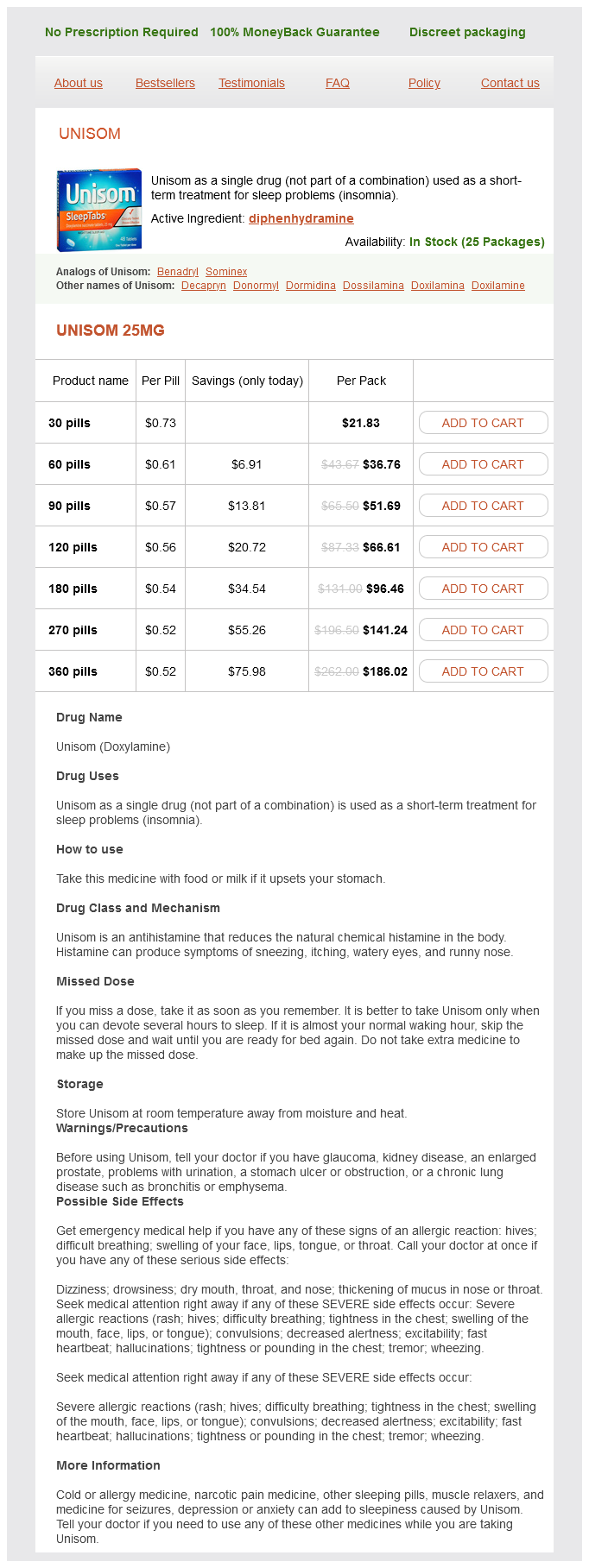
Unisom 25mg
- 30 pills - $21.83
- 60 pills - $36.76
- 90 pills - $51.69
- 120 pills - $66.61
- 180 pills - $96.46
- 270 pills - $141.24
- 360 pills - $186.02
Unisom dosages: 25 mg
Unisom packs: 30 pills, 60 pills, 90 pills, 120 pills, 180 pills, 270 pills, 360 pills
In stock: 690
Only $0,55 per item
Description
If the withdrawal period is prone to insomnia 4 weeks pregnant buy 25 mg unisom otc be troublesome insomnia quotes images generic unisom 25 mg on-line, the risks can be reduced by covering the withdrawal period with a benzodiazepine drug (usually 10 mg/day clobazam) sleep aid by nature made unisom 25 mg quality, given through the phase of active withdrawal insomnia line dance unisom 25 mg order fast delivery. It is sometimes difficult to know whether seizures during withdrawal are a results of the withdrawal or just the background epilepsy. Whenever potential, a long-term view must be taken and over-reaction in the short-term reaction to seizures should be averted. Sometimes the easy withdrawal of a drug will result in improved seizure control by reducing side-effects, assuring better compliance and lowering drug interactions. The usual indications for serum stage monitoring (see Chapters 9 and 10) are proven in Table eleven. Epilepsy surgery Resective or practical surgery for epilepsy ought to be considered in any affected person with epilepsy not responding to drug remedy and if the potential benefits are thought of to outweigh the potential dangers [35,36,37,38]. This assessment is complicated and presurgical evaluation ought to be carried out in an experienced epilepsy surgery unit. The parts of evaluation are given in Section four of this guide, and an summary of presurgical evaluation in Chapter 56. It is a multidisciplinary course of, involving neurologist, neurosurgeon, psychologist, psychiatrist, neurophysiologist and radiologist. Onward referral to a specialised unit ought to be made for all patients in whom surgery is taken into account an option. Limits on remedy Therapy will fail to management seizures within the long-term in about 10�20% of all sufferers creating epilepsy, and the next proportion of these Table eleven. This leads to higher tolerability, and is particularly important when adding benzodiazepines, carbamazepine, lamotrigine, levetiracetam, primidone or topiramate. Too fast an introduction of those medicine will virtually invariably end in side-effects. It is common to purpose initially for a low upkeep dose but in severe epilepsy greater doses are often required. Concomitant medicine Changing the dose of 1 antiepileptic (either an increment or a decrement) can in plenty of instances affect the degrees of other medication, and the changing levels of concomitant treatment can contribute to changing side-effects or effectiveness. For medicine whose effectiveness and/or side-effects are closely linked to serum degree � notably phenytoin, carbamazepine and phenobarbital � measurement of the serum level can be helpful in deciding dosage. Monitoring serum stage is especially essential within the case of phenytoin, which has a non-linear relationship between dose and serum stage. Drug interactions are one other important aspect of remedy with antiepileptic medication. They are frequent and essential interactions with different antiepileptic and non-antiepileptic drugs [33,34]. The antiepileptic medication that are most Serum stage monitoring 146 Chapter eleven Table 11. Patients with mild seizures (568 sufferers returned a questionnaire; impacts reported = 1140) Area Driving ban Work Social life Psychological Loss of confidence None (b) Patients >65 years. Patients with mild seizures (127 patients returned a questionnaire; impacts reported = 191) Area Driving ban Psychological Work Bad memory None Patients reporting a serious impression on this area (%) 32 19 14 9 19 Area Driving ban Psychological Seizures Work Social life Loss of self-confidence Mobility Supervision Patients with extreme seizures (28 patients returned a questionnaire; impacts reported = 57) Patients reporting a significant influence on this area (%) 39 29 21 21 14 eleven 11 11 Patients reporting a serious impression in this space (%) forty eight 36 19 18 eight eleven Patients with extreme seizures (347 patients returned a questionnaire; impacts reported = 842) Area Work Psychological Social life Driving ban Supervision Independence Patients reporting a serious impression on this space (%) fifty one 35 32 28 10 9 Source: Moran et al. Individual patients will take very completely different views about where to strike this stability. Counselling and information provision Counselling ought to be supplied for chronic sufferers, as for all patients, on the matters listed in Table eleven. Those with chronic energetic epilepsy, nevertheless, have extra problems: fears concerning the risks of future seizures, anxiousness in regards to the stigmatizing results of epilepsy, and its effects on employment, self-esteem, relationships, schooling and leisure actions. The areas by which the situation impacted have been demonstrated in a big survey of 1652 persons on treatment with epilepsy in Britain [39], summarized in Table eleven. Many of these could possibly be ameliorated by acceptable counselling and these subjects must be addressed. Acknowledgement Some of this chapter is predicated on the Handbook of Epilepsy Treatment [40]. The therapy of chronic epilepsy: a evaluation of latest studies of clinical efficacy and side-effects. Results of treatment modifications in sufferers with apparently drug-resistant persistent epilepsy. Treatment adjustments in a cohort of individuals with apparently drug-resistant epilepsy: an prolonged follow-up. Predicting drug-resistant patients who reply to add-on therapy with levetiracetam. Early versus late remission in a cohort of patients with newly diagnosed epilepsy. The evolution of epilepsy principle and practice at the National Hospital for the Relief and Cure of Epilepsy, Queen Square between 1860 and 1910. Medical care of epileptics: report of the sub-committee of the Central Health Services Council (Chairman: Cohen, Lord Henry). Department of Health and Social Security, the Department of Education and Science and the Welsh Office. For appropriate candidates with medically refractory epilepsy, relying on the kind of procedures, 50�80% could become seizure-free after epilepsy surgery [3,4,5]. One thousand and 13 sufferers (mainly adults) who had been seizure-free for no less than 2 years have been randomized to one of these policies, and adopted up for between 1 and 5 years. Based on actuarial analysis, by 2 years after randomization, 22% of patients within the continued therapy group had relapse of seizure(s), in contrast with 41% within the withdrawal group. The examine was restricted by its open-label design, and hence full compliance with the randomized insurance policies was not attained and full discontinuation was achieved in solely 73% of sufferers in the slow withdrawal group, and 35% of patients randomized to continued remedy nonetheless reduced or withdrew treatment throughout follow-up. In addition, there was substantial self-selection with 776 eligible subjects refusing to be randomized, an important cause being possession of a driving licence. The reduced medication was replaced by a placebo to maintain the study double-blinded. Of all recurrences, 80% occur within the first 12 months and 90% inside the first 2 years. However, these research likely suffered from significant selection bias and may need underestimated (or overestimated in some cases) the relapse charges, many have been small scale and retrospective and all but one were uncontrolled. Factors influencing the risk of seizure relapse within the multivariate model included drug withdrawal, period of lively disease, variety of years of remission at research entry, irregular psychiatric examination and epilepsy syndrome [10]. The danger is highest within the first 6�12 months of withdrawal (including the tapering phase). The precise relapse charges noticed seem to be heavily influenced by the traits of the populations included. Rapid tapering was defined as withdrawal over three months or less and slow tapering as withdrawal over more than three months. The rapid taper group (tapering over 6 weeks) recruited 81 members and the sluggish taper group (9 months) included 68 members. However, because of the small pattern size, the reviewers felt it not attainable to draw a reliable conclusion. Syndromic classification the danger of relapsing after therapy withdrawal seems to be strongly influenced by the underlying epilepsy syndrome. Although, in the brief term, most of those kids turn out to be seizure-free on treatment, about 25% relapse when medications are withdrawn [17,18]. The results of Dutch study of epilepsy in childhood totally help these findings with 23. It confirmed 14 (82%) of them attained 2-year remissions but, with lengthy follow-up, three patients relapsed; end result after relapse was not described in detail [21]. The Dutch research included eight adolescents, 75% of whom achieved remission through the 15-year follow-up. Another examine with more than 20 years of follow-up also found that 7 of 40 patients have been seizure-free off drugs [27]. Remote symptomatic epilepsies are less likely to be managed than idiopathic epilepsies [1]. The former are also about 50% extra likely to relapse if medicine is stopped than the latter, according to a meta-analysis of non-randomized studies [9]. This was most likely associated to the limited availability of sophisticated neuroimaging strategies on the time the research was carried out in the early Nineteen Eighties. Seizure sort Many research have examined the outcome of specific forms of seizures quite than syndromes. Management of Epilepsy in Remission 151 with mild epilepsies characterised by only some seizures responding instantly to treatment, as well as the limited neuroimaging techniques out there in the older research.
NAC (N-Acetyl Cysteine). Unisom.
- Dosing considerations for N-acetyl Cysteine.
- Preventing complications of lung disease (chronic obstructive pulmonary disease, COPD).
- Preventing side effects of doxorubicin (used for certain types of cancer).
- Preventing complications of chronic bronchitis.
- Helping to prevent crusting in people with tracheostomy.
- Chest pain (angina).
- Cystic fibrosis.
- How does N-acetyl Cysteine work?
- What is N-acetyl Cysteine?
Source: http://www.rxlist.com/script/main/art.asp?articlekey=96979
Soon after sleep aid powder unisom 25 mg buy generic on-line, midazolam was often used in early status epilepticus regardless of its brief duration of action and high risk of recurrence of seizure activity 8dp3dt insomnia trusted unisom 25 mg. In refractory standing epilepticus sleep aid somnapure reviews unisom 25 mg buy generic line, midazolam is used as a high-dose continuous infusion sleep aid products unisom 25 mg cheap with visa, to overcome its short-lasting effects. The efficacy of intravenous midazolam in acute seizure emergencies has been demonstrated in 22 non-randomized [140,191,192,193,194,195,196, 197,198,199,200,201,202,203,204,205,206,207,208,209,210,211] and two randomized trials [212,213], together with more than 900 patients. Because of the water solubility of midazolam, which is exclusive among the many clinically used benzodiazepines, different routes of administration (intramuscular, intranasal, buccal or sublingual) are feasible and offer a bonus over different benzodiazepines. A total of 12 non-randomized [214,215,216,217,218,219,220,221,222,223, 224] and eleven randomized trials using intranasal [156,157,225,226,227], buccal [158,160,161] and intramuscular [184,228] midazolam have been carried out. Buccal, nasal and intramuscular midazolam were mainly assessed for the therapy of acute repetitive seizures and early standing epilepticus, whereas most studies utilizing intravenous midazolam as a continuous infusion included sufferers with refractory and super-refractory standing epilepticus. Overall, greater than 2000 patients treated with midazolam in numerous forms for acute seizures or status epilepticus have been reported. Intravenous use Small case sequence using intravenous midazolam within the therapy of early standing epilepticus found excellent response charges of up to 100% [207] however, as anticipated, the brief length of motion led to a disappointingly excessive number of relapses (75%) inside a quick time. In a examine from a large centre in Serbia, five of seven sufferers with early standing epilepticus experienced extreme respiratory depression and hypoventilation after 15 mg midazolam given intravenously at a fee 5 mg/min [140]. In one examine, exceptionally high continuous infusion rates up to 1 mg/kg/h have been reported [194]. In kids, there have been nearly no reports of local reactions or systemic opposed occasions in these case sequence, aside from one study which found a 3% fee of respiratory despair requiring ventilator assist [197]. In refractory childhood status epilepticus, similar doses have been used, with response charges of 76�100% and customarily low adverse event rates [193,195,204,205]. Inclusion standards within the paediatric studies various significantly and possibly not all sufferers qualified for the definition of standing epilepticus. In adults with refractory standing epilepticus, intravenous midazolam has been given as a continuous infusion [192,198,199,203, 206,209,229,230]. Withdrawal seizures have been additionally more common with midazolam than with propofol and pentobarbital (63%, 46% and 43%, respectively). However, patients given intravenous midazolam skilled significantly fewer episodes of hypotension requiring pressor brokers (30%, 42% and 77%, respectively). The authors concluded that none of those medicine is superior to the others, and that the decrease response rate with midazolam is compensated by higher tolerability. Ferlisi and Shorvon [231] reviewed all out there studies that reported the outcomes of sufferers handled with intravenous midazolam (n = 585), propofol (n = 143) and barbiturates (n = 192) for refractory and super-refractory status epilepticus. They found management of standing epilepticus in 78% (458 out of 585) for midazolam, 68% (97 out of 143) for propofol and 64% (123 out of192) for barbiturates, whereas dying charges throughout therapy were 2% (12 out of 585), 8% (12 out of 143) and 19% (37 out of 192), respectively. The authors concluded that midazolam given by continuous infusion is the popular alternative for many cases, whereas barbiturates and propofol should be restricted to essentially the most severe or super-refractory instances. Naritoku and Sinha [211] found an unexpectedly slow clearance after prolonged intravenous midazolam infusion in two sufferers, with terminal half-lives of fifty two. This could contribute to a extra delayed awakening after long-term remedy of refractory standing epilepticus. In an open-label trial performed in 40 kids aged 2�12 years with refractory standing epilepticus (motor seizures uncontrolled after two doses of 0. Status was managed in 86% of kids with midazolam and 89% with diazepam, however relapse charges had been considerably larger in the midazolam group (57% versus 16%). A subsequent randomized trial has been performed in a hundred and twenty children aged 6 months to 14 years with persisting seizures at arrival to the emergency division. Patients were randomized to three groups of forty patients every (intravenous midazolam, diazepam or lorazepam) [213]. Numbers of sufferers with seizure cessation have been considerably higher with midazolam (90%) and lorazepam (95%) than diazepam (72. No important variations in imply length to clinical seizure cessation or in side-effects were discovered besides extreme somnolence, which was significantly larger in the diazepam group. Intramuscular use Early reviews utilizing intramuscular midazolam for acute seizures or early status epilepticus [221,222,223,227,232] discovered good tolerability and response charges of 80�92%. Benzodiazepines Used in the Treatment of Epilepsy 409 In two studies [219,228], considered one of which was randomized [228], intramuscular midazolam was in contrast with intravenous diazepam in early standing epilepticus in children. A subsequent massive, double-blind, randomized, non-inferiority trial compared intramuscular midazolam with intravenous lorazepam in kids and adults with convulsive standing epilepticus treated by paramedics before admission to hospital [184]. At the time of arrival within the emergency department, seizures had been absent without rescue remedy in seventy three. The two treatment teams have been comparable as regards to want for endotracheal intubation (14. Among subjects whose seizures ceased earlier than arrival in the emergency division, the median times to lively treatment were considerably lower in the midazolam group because an intramuscular injection is faster to accomplish, though the onset of action. Thus, buccal midazolam is now a extensively accepted and efficient remedy for acute seizures in childhood. Nitrazepam Nitrazepam used as continual remedy has been reported to be efficient in opposition to myoclonic, atonic and atypical absence seizures in West syndrome [238,239] and Lennox�Gastaut syndrome [36,37]. There is anecdotic expertise of its use in Wolf�Hirschhorn syndrome, a malformation syndrome typically with refractory seizures and status epilepticus [240]. A randomized trial performed in 52 youngsters with West syndrome found that nitrazepam was as efficient as adrenocorticotropic hormone by way of spasm reduction in contrast with baseline (75% of children had >50% reduction) [239]. A previous open-label examine carried out in 20 kids with medically refractory childish spasms or Lennox�Gastaut syndrome showed seizure cessation in 5, seizure discount >50% in seven cases and no response in eight sufferers [242]. Intranasal use Intranasal utility is easy to use and has the benefit of fast entry within the early part of status or in the therapy of prolonged or acute repetitive seizures in childhood. The preliminary response rate was uniformly wonderful, 67� 100%, and midazolam was a minimum of as efficient because the comparator. In one study, intranasal midazolam was even superior to rectal diazepam (87% versus 60%) [156]. Patients given intranasal midazolam acquired their therapy considerably earlier and their seizures ceased ahead of with rectal or intravenous diazepam in some studies [157,225], whereas in others seizures were managed more shortly with intravenous diazepam than with intranasal midazolam [226,227]. Adverse effects Buccal use Four randomized controlled trials, together with 564 patients, compared the efficacy of buccal midazolam with rectal diazepam in early childhood status epilepticus [158,159,160,161]. Three research found no distinction in efficacy (buccal midazolam versus rectal diazepam: 75% versus 59% [158], 57% versus 67% [160] and 78% versus 85% [161], respectively). However, all authors concluded that the buccal route was easier to use and socially more acceptable for preliminary remedy of early status epilepticus in childhood. In addition, one study found buccal midazolam much more efficient than rectal diazepam (56% versus 27%) [159]. A randomized research in contrast buccal midazolam with intravenous diazepam in 120 children with seizures persisting at arrival at emergency division. However, there are some differences within the likelihood or depth of specific side-effects in relation to pharmacokinetic factors and delicate differences in modality of interplay with benzodiazepine receptor subtypes. The opposed effects of benzodiazepines also range in relation to dosage, period of treatment, presence of absence of concomitant drugs, route of administration and specific scientific context during which these medication are used. Adverse effects of explicit relevance throughout continual treatment embody sedation, drowsiness, incoordination, cognitive impairment, fatigue, muscle weak point, blurred vision or diplopia, sexual dysfunction, modifications in appetite (at instances resulting in weight gain), mood modifications (including depression) and behavioural disturbances [63]. Some of those results, notably sedation and drowsiness, are inclined to be more marked at initiation of therapy and to decrease progressively during extended administration because of improvement of pharmacodynamic tolerance. In specific, behavioural disturbances, including hyperactivity, restlessness, irritability and aggression, happen far more incessantly in children than in adults. To reduce the occurrence of dose-related toxicity, benzodiazepines ought to be initiated at a low dosage in elderly folks, and up-titrated cautiously. On the opposite hand, the risk of withdrawal signs, including rebound aggravation of seizures, which occur when benzodiazepines are discontinued too quickly, does complicate clinical administration in some cases [63]. When benzodiazepines are used as emergency remedy, many of the antagonistic effects listed are of lesser importance, and the most important considerations are potentially serious respiratory despair, as well as hypotension. Clobazam the most common side-effect reported with the use of clobazam is sedation. However, the sedation occurring with clobazam, a 1,5-benzodiazepine, is normally much less severe than that occurring with 1,4-benzodiazepines such as nitrazepam and clonazepam [243,244]. The overall incidence of side-effects in 22 open studies with clobazam was 38%, with drug discontinuation because of side-effects being reported in 4% of patients [245]. In a examine comparing clobazam with carbamazepine and phenytoin [66], no important distinction was noticed in occurrence of side-effects corresponding to somnolence or ataxia [246]. Conversely, in comparison with clorazepate, clobazam was less nicely tolerated [247].
Specifications/Details
This is due to the high sensitivity of the rapidly proliferating malignant lymphocytes to chemotherapy and radiotherapy sleep aid zaleplon buy unisom 25 mg. This necessitates implementation of tumor lysis syndrome precautions with aggressive intravenous hydration and allopurinol insomnia 7dpo purchase 25 mg unisom otc. Rasburicase must be thought-about for sufferers with average to high tumor burdens insomnia by craig david discount unisom 25 mg visa. Most chemotherapy treatments for lymphoma have a significant threat of infectious complications sleep aid for teenagers buy unisom 25 mg amex. Antiemetic regimens are available to management chemotherapy-induced nausea and vomiting well for many standard-dose regimens. Identification of long-term complications of lymphoma therapy is significant to affected person followup and will influence therapy choices in newly recognized patients. Two leading causes of demise related to lymphoma remedy are secondary malignancies and cardiovascular disease. Treatment-related pulmonary toxicity, hypothyroidism, and infertility have been associated with lymphoma therapy as properly. Lymphoma survivors have an increased risk for growing myelodysplasia, acute myelogenous leukemia, and numerous solid tumors. Deaths have been reported resulting from the profound hypotension and circulatory collapse seen with the drug, particularly on the first dose. The package deal labeling recommends premedication with acetaminophen and 1443 Patient Care Process Patient Assessment: � Take a radical treatment historical past with explicit consideration to nonprescription or herbal medications. Therapy Evaluation: � Determine the optimum therapy routine for the affected person incorporating diagnosis, stage, and prognostic indicators. Care Plan Development: � Provide patient training concerning common toxicities related to chemotherapy such as nausea/vomiting, mucositis, myelosuppression, and alopecia. Follow-Up Evaluation: � Schedule regulatory laboratory checks together with complete blood rely and blood chemistries to monitor for chemotherapy toxicities. In the absence of infusion reactions, subsequent doses could additionally be started at the next fee and titrated extra aggressively. Reactivation of hepatitis B infections has occurred in patients treated with rituximab. Patients at high threat for hepatitis B ought to be screened and monitored rigorously for reactivation of hepatitis. If hepatitis happens, rituximab ought to be discontinued, and sufferers should be treated appropriately. Other related toxicities of rituximab embrace fever, chills, headache, asthenia, nausea, vomiting, angioedema, bronchospasm, and skin reactions. Prolonged singleagent versus mixture chemotherapy in indolent follicular lymphomas: A study of the cancer and leukemia group B. Idelalisib, a selective inhibitor of phosphatidylinositol 3-kinase-, as remedy for beforehand treated indolent non-Hodgkin lymphoma. Autologous bone marrow transplant as in contrast with salvage chemotherapy in relapses of chemotherapy-sensitive non-Hodgkin lymphoma. American Society of Clinical Oncology guideline for antiemetics in oncology: Update 2006. Treatment-related myelodysplasia and acute leukemia in non-Hodgkin lymphoma sufferers. Efficacy of abbreviated Stanford V chemotherapy and concerned subject radiotherapy in early stage Hodgkin illness: Mature outcomes of the G4 trial. Prognostic impact of germinal center-associated proteins and chromosomal breakpoints in poor threat diffuse large B-cell lymphoma. Chemotherapy alone in contrast with chemotherapy plus radiotherapy for localized intermediate-and high-grade non-Hodgkin lymphoma. List the nonhematologic toxicity to high-dose chemotherapy utilized in myeloablative preparative regimens, particularly busulfan-induced seizures, hemorrhagic cystitis, gastrointestinal toxicities, and sinusoidal obstruction syndrome. Furthermore, the limited availability of suitable donors could have also contributed to the plateau impact. In this setting, the hematopoietic cells "rescue" the recipient from in any other case dose-limiting hematopoietic toxicity. After the administration of the myeloablative preparative routine, these hematopoietic cells serve as a rescue intervention to reestablish bone marrow perform and avoid long-lasting, life-threatening bone marrow aplasia. A myeloablative preparative regimen involves the administration of sublethal doses of chemotherapy to the recipient to eradicate residual malignant disease. The chance for full histocompatibility occurring in a person with only one sibling is 25%. The method for harvesting hematopoietic cells is decided by the anatomic source (ie, bone marrow or peripheral blood). Multiple aspirations of marrow are obtained from the anterior and posterior iliac crests until a quantity with a sufficient variety of hematopoietic stem cells is collected (ie, 600�1200 mL of bone marrow). The bone marrow then is processed to remove fats or marrow emboli and often is infused intravenously into the patient much like a blood transfusion. For an autologous transplant, the harvest happens before administering the preparative routine; subsequently, autologous hematopoietic cells should be cryopreserved and stored for future use. When allogeneic hematopoietic cells are obtained from umbilical cord blood, the cord blood is obtained from a consenting donor in the delivery room after birth and supply of the placenta. Numerous umbilical twine blood registries exist, with the goal of offering different sources of allogeneic stem cells. One potential limitation to the utilization of umbilical wire blood transplants is the inability to use donor-lymphocyte infusions in the event of relapse. Engraftment After chemotherapy and radiation, pancytopenia lasts until the infused stem cells reestablish useful hematopoiesis. Myeloablative preparative regimens have significant regimen-related toxicity and morbidity and thus usually are limited to wholesome, younger (ie, usually lower than 50 years) sufferers. Residual host-versusgraft results may result in graft failure, which is also known as graft rejection. Hypocalcemia may happen owing to citrate accumulation, which decreases ionized calcium concentrations throughout apheresis. Functional restoration of T cells within the recipient is delayed, and the risk of Epstein-Barr virus�associated lymphoproliferative issues is higher with using T-cell�depleted bone marrow. The use of donor Graft-Versus-Tumor Effect A graft-versus-tumor impact attributable to the donor lymphocytes happens after transplant. Rapid taper of immunosuppression in patients with residual disease may induce a graft-versus tumor effect. In donor lymphocyte infusion, lymphocytes are collected from the peripheral blood of the donor and administered to the recipient. Patients with hematologic Patient Encounter, Part 1 A 55-year-old lady is recognized with acute myeloid leukemia with advanced cytogenetics. What are the benefits and downsides of acquiring and infusing hematopoietic stem cells from a peripheral blood stem cell supply as opposed to a bone marrow source The preparative routine is designed to eradicate immunologically energetic host tissues (lymphoid tissue and macrophages) and to stop or minimize the event of host-versus-graft reactions. Most allogeneic preparative regimens for the treatment of hematologic malignancies comprise cyclophosphamide, radiation, or each. This routine is immunosuppressive and has inherent activity against hematologic malignancies (eg, leukemias and lymphomas). The concept of donor immune response having a graftversus-tumor effect gave rise to the idea that a strongly immunosuppressive, however not myeloablative, preparative routine (ie, a nonmyeloablative transplant might end in a state of chimerism in which the recipient and donor are coexisting). Toxicities and Management of Preparative Regimens Myelosuppression is a frequent dose-limiting toxicity for antineoplastics when administered within the typical doses used to treat most cancers. Anticonvulsants are begun shortly earlier than busulfan, with the loading dose accomplished no much less than 6 hours earlier than the primary busulfan dose. Oral loading and upkeep regimens typically are adequate as a end result of target phenytoin concentrations of 10 to 20 mcg/mL (10�20 mg/L; 40�79 mol/L) can be achieved by the height time of seizure threat. Chimerism is assessed inside peripheral blood T cells and granulocytes and bone marrow utilizing conventional (eg, using intercourse chromosomes for opposite-sex donors) and molecular (eg, variable number of tandem repeats) strategies for same-sex donors. Donor cells eradicate residual host hematopoiesis, and the graft-versus-tumor results generally occur after the event of full donor T-cell chimerism. After engraftment, blended chimerism ought to be present and is shown by the presence of both donor- and recipientderived cells.
Syndromes
- General discomfort, uneasiness, or ill feeling (malaise)
- Locking of the knee joint
- Widen (dilate) an airway that is blocked or narrowed
- Heart disease
- Menopause
- Dry mouth
- Do NOT move the person if there is reason to suspect a head or neck injury.
- Losing a job, relationship, education, or career opportunity due to gambling
Related Products
Additional information:
Hyperuricemia sleep aid breathing techniques unisom 25 mg on-line, gout insomniax order 25 mg unisom with visa, and associated comorbidities: Cause and impact on a twoway street sleep aid zazen cheap 25 mg unisom visa. Preventing and treating acute gout assaults throughout the scientific spectrum: A roundtable dialogue sleep aid 1 purchase 25 mg unisom visa. Efficacy and tolerability of celecoxib within the therapy of acute gouty arthritis: A randomized controlled trial. High versus low dosing of oral colchicine for early acute gout flare: Twentyfour�hour consequence of the primary multicenter, randomized, doubleblind, placebo-controlled, parallel-group, dose-comparison colchicine research. Identify the specified therapeutic outcomes for a affected person with musculoskeletal damage or pain. Identify the elements that guide number of an analgesic or counterirritant for a particular patient. Recommend acceptable nonpharmacologic and pharmacologic remedy for a affected person with musculoskeletal harm or ache. Design a affected person training plan, including nonpharmacologic therapy and preventative strategies. Develop a monitoring plan to assess therapy of a patient with a musculoskeletal disorder. This injury is common in activities similar to working, significantly in periods of elevated depth or length of coaching. In the United States, over 60 million musculoskeletal accidents happen each year, with 60% of episodes treated in ambulatory care workplaces. Some musculoskeletal issues are induced by trauma on the office both via a one-time overexertion or through repetition and cumulative trauma. Musculoskeletal accidents are extra likely to occur with heavy lifting, exposure to vibration, or working overhead. Tendons and ligaments are composed of collagenous fibers which have a restricted capability to stretch. Muscle Strains and Sprains A sprain is an overstretching of supporting ligaments that ends in a partial or full tear of the ligament. The key distinction is that a sprain entails damage to ligaments, whereas a strain includes damage primarily to muscle. Overloading the muscle and connective tissue ends in complete or partial tears of the skeletal muscle, tendons, or ligaments. Without interruption, the neurochemicals ultimately result in a firing of the unmyelinated or thinly myelinated afferent neurons. This receptor activation also increases the sensitivity of nociceptors to painful stimuli. Capsaicin relieves pain by stimulating the release of substance P from sensory nerve fibers, finally depleting shops of substance P. This results in rupture of blood vessels on the site of the injury, resulting in the formation of a hematoma. Finally, capillaries develop into the world, and muscle fibers regenerate through the repair and reworking phases of therapeutic. Bursitis and Tendonitis Bursitis is an inflammation of the bursa, the fluid-filled sac near the joint where the tendons and muscular tissues pass over the bone. Bursitis causes stiffness and ache as a end result of the bursa serves to cut back friction within the joint house. Tendonitis (or tendinitis) refers to irritation of the tendon that follows incomplete tendon degeneration. Specifically, collagenous tendon tissue is replaced with tissue that lacks the organized collagen association of a traditional tendon. In truth, many sufferers recognized with persistent tendonitis may not have irritation however as a substitute have tendinosis, a situation marked by these degenerative modifications. As a result of the mobile adjustments, the tendon progressively loses elasticity and its capacity to handle stress or weight. This is accomplished by lowering the severity and period of pain, shortening the recovery interval, and stopping acute injury pain from turning into chronic pain. Ideally, a patient ought to be ready to proceed to perform actions of day by day living and keep normal features in the workplace. Children ideally should be succesful of preserve traditional play actions and sports activities schedules. It can additionally be important to reduce the potential for opposed drug occasions during treatment. Inflammation and Peripheral Pain Sensation Inflammation is a typical pathway in soft-tissue injury of musculoskeletal issues. Inflammatory processes are thought of to be a essential a half of the remodeling process as a end result of inflammatory cells remove broken tissue. The initial harm exposes membrane phospholipids to phospholipase A2, resulting in the formation of arachidonic acid. The increased permeability also will increase proteolysis, or the breakdown of proteins within the damaged tissue. These substances make nerve endings extra excitable, and the nerve fibers are more reactive to serotonin, heat, and mechanical stimuli. However, further evaluation could additionally be warranted if acute ache persists longer than Patient Encounter 1, Part 1 A 28-year-old lady presents with left ankle ache. The ache happens at relaxation and is worsened with weight bearing on the ankle and with rotation or movement. Signs and Symptoms of Acute Soft-Tissue Injury (Strains, Sprains)8,13 � Discomfort starting from tenderness to pain might happen at relaxation or with motion � Swelling and inflammation of the affected area � Bruising � Loss of motion � Mechanical instability Signs and Symptoms of Repetitive Strain or Overuse Injury (Tendonitis, Bursitis)2,four,7 � Pain and stiffness that happens either at rest or with movement � Localized tenderness on palpation � Mild swelling of the affected area � Decreased vary of movement � Muscle atrophy Other Diagnostic Tests and Assessments8 � Radiograph (x-ray): Evaluate bony buildings to rule out fracture, malalignment, or joint erosion as the first cause of pain. Low back ache accompanied by burning, radiating pain, or problem urinating requires further analysis. In kids and adolescents, treatment practices are just like the strategy in adults with a give consideration to nonpharmacologic remedy and oral analgesics. Children youthful than 2 years, elderly individuals, and pregnant girls additionally might have special care. Elderly sufferers may be more vulnerable to systemic results due to thinning of the pores and skin and increased absorption of topical agents and drug interactions from polypharmacy. Rest eases stress on the affected space and promotes pain management in the course of the acute inflammatory part (the first 1�5 days after injury). Cold causes vasoconstriction, assisting in prevention of a large hematoma and providing analgesia by slowing nerve impulses. Immediately after harm, ice additionally helps to cut back metabolic price and oxygen demand, thereby lowering tissue damage from hypoxia. Elevation decreases blood flow and will increase venous return from the affected space. In addition to minimizing the acute inflammatory response, rest prevents extra damage to the affected space. Movement within the injured tissue could cause further retraction of the ruptured muscle and enhance the dimensions of the gap within the muscle to be healed. Therefore, early activity predisposes a patient to additional harm, but extended inactivity can lengthen restoration instances. The benefits of ice following harm are properly documented, but recommendations for the method of application differ broadly. A thin sheet or napkin will shield the pores and skin and in addition enable for higher chilly transfer than thicker materials corresponding to a towel. Alternatively, soaking the area for 20 minutes in a cool tub (13�C [55�F]) offers efficient cooling, supplied the area can remain elevated. For small areas, an ice massage for 5 to 10 minutes can cool the area and add relief. A heating pad, warmth wrap, or warm tub can be utilized as long as no edema is current and no swelling develops after warmth is utilized. Patients should keep away from sleeping with or sitting or lying on heating pads because this can result in burns. Low-level warmth, such as that equipped by therapeutic heat wraps (eg, ThermaCare), might provide a safer means of warmth software.
Usage: ut dict.
The capacity of a given compound to act each as enzyme inducer and inhibitor supplies an evidence for the inconsistent and apparently contradictory nature of some drug interactions sleep aid 100 mg 25 mg unisom amex. The extent of those totally different interactions might range across individuals insomnia 1997 generic 25 mg unisom mastercard, which might explain the unpredictable and bi-directional modifications in plasma phenytoin concentration after addition or elimination of phenobarbital remedy sleep aid for 10 month old buy unisom 25 mg cheap. The interaction between valproic acid and olanzapine offers a further instance [34] insomnia 11dpo unisom 25 mg purchase free shipping. It has been documented that co-administration of valproic acid with olanzapine is related to a small statistically important, however presumably not clinically related, lower in serum olanzapine concentrations. As changes in serum olanzapine focus may vary with time and with valproate concentrations, it may be speculated that valproic acid may act both as an inducer of olanzapine metabolism and as a aggressive inhibitor. When there are mixtures of three or more medicine, in some circumstances the opposite effects of an enzyme inhibitor and an enzyme inducer may cancel out. However, lamotrigine clearance values in a triple-therapy regimen which includes valproic acid and an enzyme inducer have been comparable with these observed in patients on lamotrigine monotherapy [30]. In some cases, the clinical consequences of those interactions are comparatively modest, because the partial lack of efficacy resulting from the decreased serum concentration of the affected drug is balanced by the antiepileptic action of the added drug. In specific, therapy with valproic acid, carbamazepine, lamotrigine and tiagabine typically requires enhance in dosage when co-administrated with enzyme-inducing treatment. As enzyme induction is a reversible phenomenon, explicit warning is required when an inducing agent is discontinued. Therapeutic drug monitoring studies instructed that serum lamotrigine concentrations could also be slightly decreased when oxcarbazepine is co-administered and lamotrigine dosage could must be elevated by approximately 20�30% [52]. A managed research reported a decrease of 40�50% in plasma lamotrigine concentrations in 4 out of seven sufferers after the addition of topiramate to lamotrigine therapy [53]. On average, after the addition of valproic acid, serum phenobarbital concentrations improve over a quantity of weeks by about 30�50%, although the interindividual variability is giant [3]. A discount in phenobarbital (or primidone) dosage by up to 80% could additionally be required to keep away from adverse effects similar to sedation and cognitive impairment. However, this interplay will not be apparent when monitoring is based solely on complete phenytoin concentrations, because of the concurrent displacement of phenytoin from plasma protein binding sites. The effect of valproic acid on the pharmacokinetics of lamotrigine has been extensively studied. Valproic acid has been demonstrated to virtually double the half-life and serum concentrations of lamotrigine at dosages of around 500 mg/day valproate [56]. This interplay is of major medical significance not solely because it can lead to lamotrigine-related neurological antagonistic results, but in addition because it could contribute to the elevated threat of pores and skin rashes when these two drugs are co-administered [3,57]. Since the event of pores and skin rashes is dependent on the speed of increase of serum lamotrigine concentration, the addition of lamotrigine to present valproic acid remedy ought to be undertaken with caution, utilizing a low starting dose (in adults, 25 mg on alternate days) and a sluggish dose titration price. In carbamazepine-treated sufferers, valproic acid, an inhibitor of epoxide hydrolase, could enhance the plasma focus of carbamazepine-10,11-epoxide, often resulting in neurotoxic indicators, with out inflicting any substantial changes within the concentration of the mother or father drug [59]. Valpromide, an amide by-product of valproic acid, is a stronger inhibitor of epoxide hydrolase than valproic acid. Thus, addition of valpromide to the therapeutic routine of a affected person stabilized on carbamazepine may trigger will increase of as much as eight times in carbamazepine-10,11-epoxide concentrations, usually with signs of toxicity [3]. The mechanism for this interaction is unknown but could involve inhibition of carboxylesterases. However, this interplay is complicated by the reality that both compounds may also act as enzyme inducers. In general, phenytoin tends to cause a small enhance in plasma phenobarbital focus [3]. As a consequence, oxcarbazepine, significantly when used at excessive doses (>1800 mg/day), could increase plasma phenytoin concentrations by as a lot as 40% [60]. Felbamate is a broad ranging inhibitor of many drug-metabolizing enzymes and should trigger a significant elevation of plasma concentrations of phenobarbital, phenytoin and 354 Chapter 25 valproic acid [47]. When co-administeded with carbamazepine, felbamate may increase plasma levels of carbamazepine-10,11-epoxide, together with a reduction in carbamazepine levels [47]. However, the scientific importance of those interactions is restricted because of the diminished use of felbamate because of critical liver and bone marrow toxicity. The interaction between lamotrigine and oral contraceptives has been extensively investigated. Administration of the contraceptive capsule causes a decrease in serum lamotrigine ranges by about 50% [65], which can lead to loss of seizure management in some women [66]. Conversely, a rebound improve in serum lamotrigine levels with attainable signs of toxicity could also be noticed when the contraceptive pill is discontinued. The interaction follows a cyclic pattern, with a marked lower in serum lamotrigine ranges when the active tablet is taken and a rise in lamotrigine focus in the course of the pill-free days [67]. Therefore, the serum concentrations of lamotrigine ought to be carefully monitored in ladies taking oral contraceptives. Valproic acid is affected by oral contraceptives by way of a mechanism much like that of lamotrigine, however much less pronounced, as demonstrated by a 22% and 45% increase within the obvious clearance of whole and unbound valproic acid, respectively [68]. Accordingly, the serum concentrations of valproic acid should be carefully monitored in ladies treated with oral contraceptives [69]. A clinically relevant drug interaction can occur between valproic acid and antibiotics of the carbapenem class such as imipenem, meropenem and panipenem [11]. Administration of carbapenem antibiotics has been reported to trigger a fast and pronounced lower in plasma concentrations of valproic acid from 60�80 to 0�25 �g/mL. Among macrolide antibotics, erythromycin, clarithromycin and troleandomycin are essentially the most potent inhibitors of carbamazepine metabolism; some sufferers have up to 4 instances the conventional plasma focus of carbamazepine which can trigger severe toxicity [73]. There are reports of ritonavir causing twoto threefold increases in plasma concentrations of carbamazepine [76]. The calcium antagonists verapamil and diltiazem are potent inhibitors of carbamazepine metabolism and will improve plasma carbamazepine levels by 50�100% when administered to patients with epilepsy [4]. However, as every phenobarbital metabolic pathway contributes for no extra than 20�30% of its whole clearance, it can be expected that solely broad-spectrum inhibitors would produce clinically related effects on phenobarbital elimination. The magnitude of the pharmacokinetic change introduced on by these interactions is best with medication that undergo extensive first-pass metabolism, whereas their medical repercussions vary relying on the therapeutic index of the affected drug. When active metabolites are shaped, enzyme induction could lead to potentiation of therapeutic and/or poisonous effects. Carbamazepine, phenytoin, phenobarbital, primidone, eslicarbazepine, felbamate oxcarbazepine, rufinamide and topiramate (at doses >200 mg/day) stimulate the metabolism of oral contraceptives, thus decreasing the efficacy of the contraceptive tablet [2]. However, special consideration is required for lamotrigine, as a end result of oral contraceptives stimulate its metabolism and reduce its plasma concentration by 50% at steady-state, probably resulting in worsened seizure control or indicators of toxicity when the contraceptive is discontinued [65,66]. However, the interaction between phenytoin and warfarin can be extra advanced with an preliminary improve in anticoagulant action, after which the focus of warfarin can decrease [2]. As nearly all of these agents have a slim therapeutic index, any interplay affecting their activity can have critical consequences by way of toxicity or loss of efficacy. In basic, these interactions would be expected to result in decreased efficacy of the affected drug, although for medication that have lively metabolites. These interactions are often clinically significant because the decrease within the antidepressant or antipsychotic concentration may result in re-emergence of psychopathology. Interactions resulting in increased focus of other medication As a result of its enzyme-inhibiting properties, valproic acid could increase the plasma concentrations of several drugs, including lorazepam, zidovudine, warfarin, some antidepressant and antineoplastic medication [4]. A clinically essential, typically under-recognized interaction could happen between valproic acid and the oral anticoagulant warfarin [82]. A massive body of proof from case reviews, pharmacokinetic investigations in wholesome topics and depressed patients and Therapeutic Drug Monitoring database research has shown that valproic acid can cause a 50�100% elevation in plasma concentrations of the tricyclic antidepressants amitriptyline and nortriptyline, occasionally resulting in severe antagonistic effects [8,83]. Pharmacodynamic interactions Pharmacodynamic interactions take place at the site of drug motion [1,6]. They lead to a modification of the pharmacological motion with none change within the plasma drug concentration and are due to this fact more difficult to identify and measure than pharmacokinetic interactions. However, in using the combination of lamotrigine Drug Interactions 357 and valproate, a dose reduction in each drugs could additionally be required so as to minimize the chance of intolerable adverse impact synergism [6]. Combinations of two sodium-channel blockers, similar to carbamazepine and oxcarbazepine, or carbamazepine and lamotrigine, could cause additive neurotoxic effects, similar to dizziness, diplopia or ataxia [2]. In some circumstances, these associations might lead to increased efficacy as for the treatment of persistent ache. Some ache administration tips advocate combos of antiepileptics and antidepressants, as they act via different analgesic mechanisms [8]. Suggested combinations include nortriptyline and gabapentin for neuropathic pain [86], and low-dose pregabalin and low-dose antidepressants as adjunctive to opioids for intractable painful bone metastasis [87]. Although the mixture of lithium and valproate is generally properly tolerated and efficient in treating bipolar dysfunction, additive opposed reactions such as weight acquire, sedation, gastrointestinal complaints and tremor have been reported in some patients [85]. Concomitant administration of valproic acid with the second-generation antipsychotics clozapine, olanzapine or quetiapine seems to be relatively secure, although it could be related to additive side-effects together with weight achieve, drowsiness and delirium [88].
Tags: trusted unisom 25 mg, discount 25 mg unisom with visa, purchase 25 mg unisom amex, unisom 25 mg order fast delivery, unisom 25 mg buy discount on-line, unisom 25 mg buy amex, unisom 25 mg purchase fast delivery, unisom 25 mg generic online, unisom 25 mg order without a prescription, 25 mg unisom buy otc, 25 mg unisom purchase with mastercard, 25 mg unisom with visa, generic unisom 25 mg overnight delivery, unisom 25 mg discount visa, unisom 25 mg generic without prescription, unisom 25 mg order online
9 of 10
Votes: 66 votes
Total customer reviews: 66
Customer Reviews
Killian, 51 years: Differential dosing determined by the circadian rhythm of seizures has been advocated [96].
Jaroll, 58 years: The evolution of genetic counselling right into a process that involves an entire household requires extreme warning.
Ismael, 56 years: Current tips stratify sufferers using these criteria to have the ability to determine those most likely to profit from antibiotics.
Lester, 41 years: The intranasal route may also be used for this indication, significantly in youngsters, but its worth in contrast with the buccal or intramuscular route is much less established.